
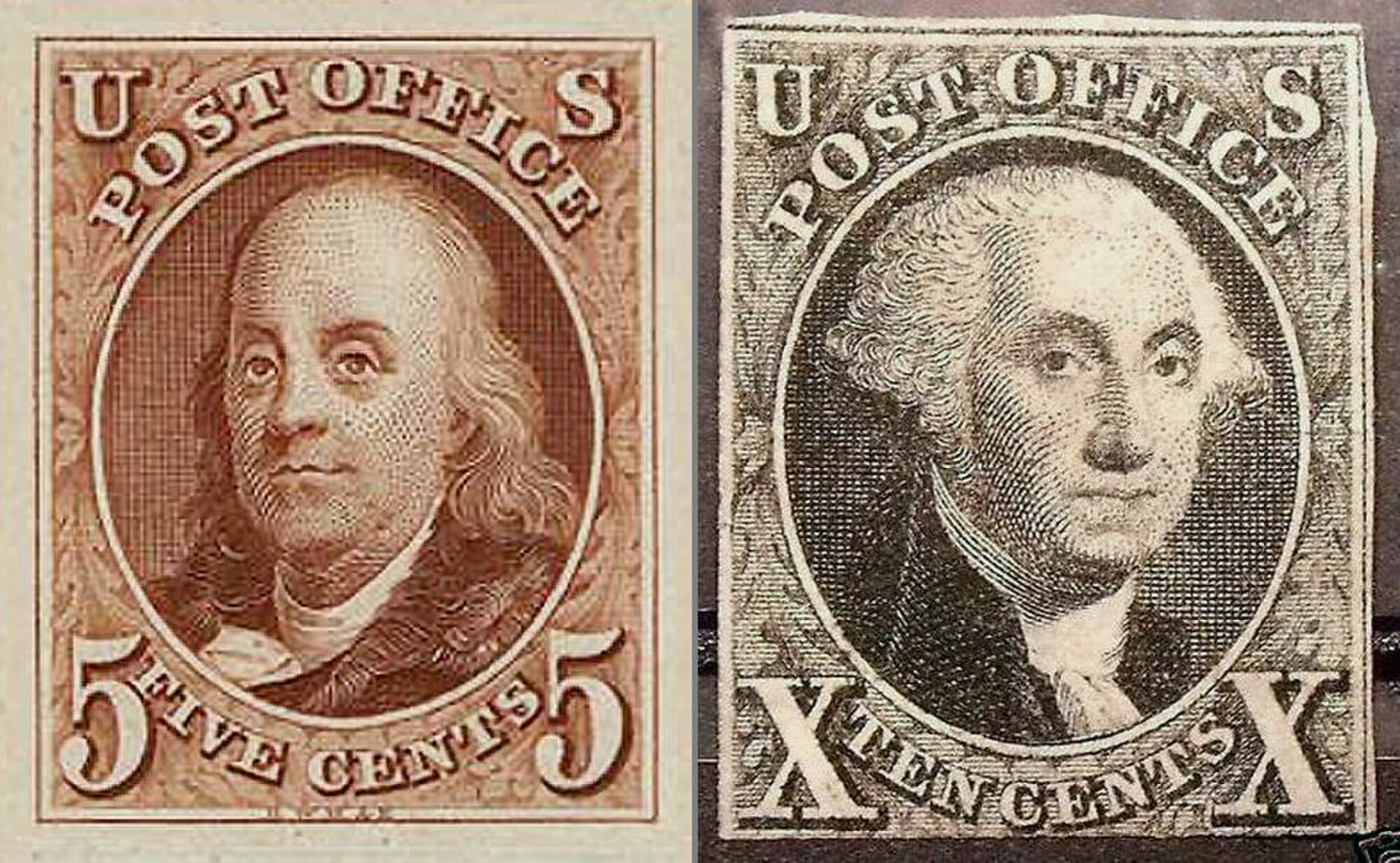
On July 1, 1847, the United States Post Office revolutionized American communication by placing its first government‑issued postage stamps on sale in New York City. Before this landmark change, the recipient of a letter—rather than the sender—was typically responsible for paying the often‑costly delivery fees upon arrival, a notoriously inefficient system that left millions of letters unclaimed each year. The inaugural issue consisted of a five‑cent stamp featuring Benjamin Franklin for shorter distances and a ten‑cent stamp featuring George Washington for longer routes, though it would take nearly a decade before their use became strictly mandatory across the postal system.
The transformative—and largely unseen—consequence of this shift was the sudden emergence of modern personal privacy. Under the old pay‑on‑delivery model, postal clerks had to open, inspect, weigh, and calculate complex distance‑based rates for every unsealed sheet of paper. Standardized prepayment changed everything; by basing postage solely on weight, the Post Office inadvertently created a system where letters could be securely sealed inside envelopes without incurring extra fees. This single administrative reform reshaped American life, turning the mail from a semi‑public, highly exposed process into a private, sealed channel for personal correspondence.
