
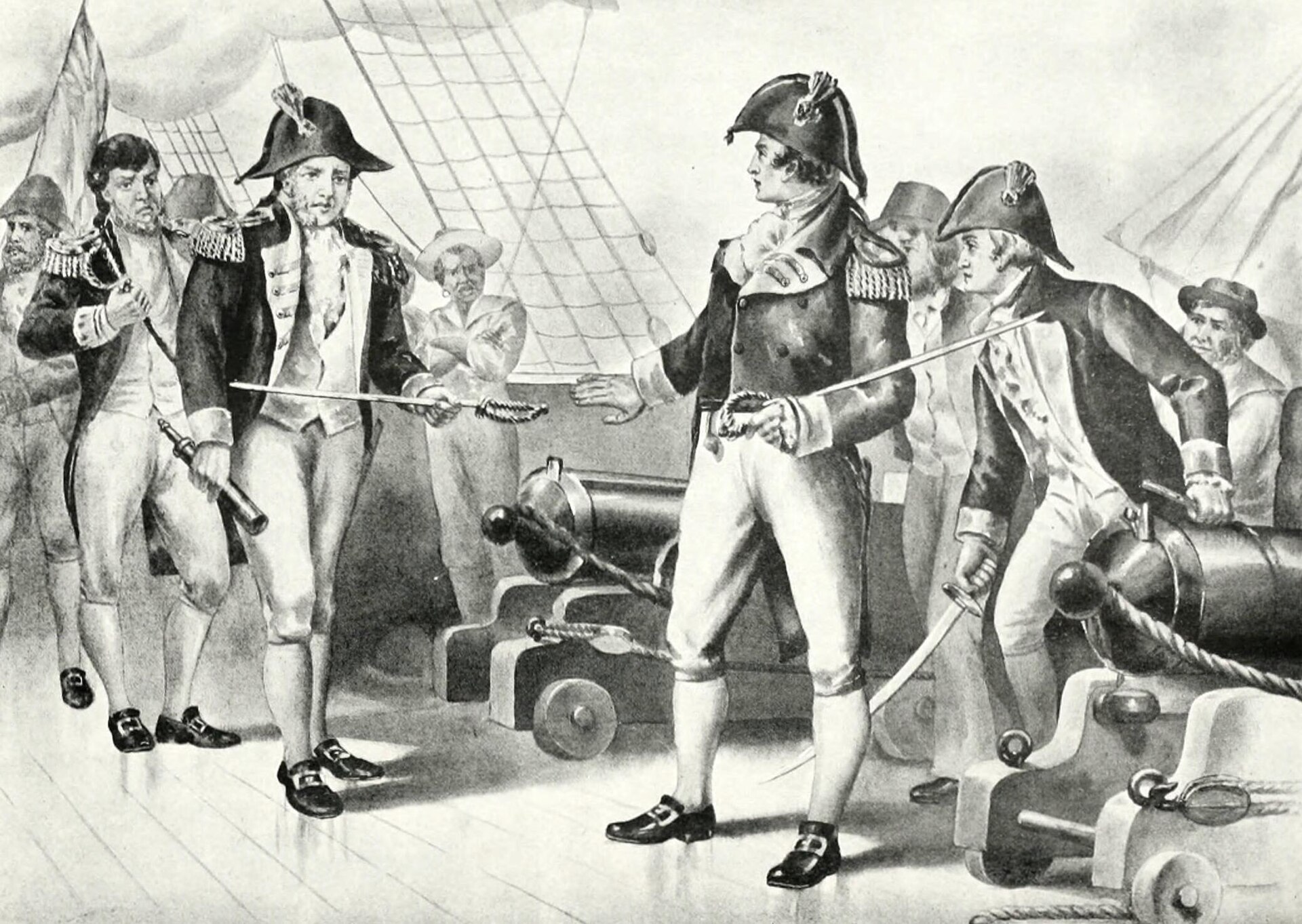
– June 22, 1807 –
In a dramatic escalation of maritime hostility, the British warship HMS Leopard intercepted and opened fire on the American frigate USS Chesapeake just off the coast of Norfolk, Virginia. British naval officers boarded the crippled vessel and forcibly removed four crew members. While Britain claimed all four were Royal Navy deserters, three were actually American citizens who had been illegally impressed into British service. The prisoners were taken to the British naval base in Halifax, Nova Scotia, where the fourth man—a genuine British deserter—was court-martialed and subsequently hanged from the yardarm of his former ship. This brazen violation of American sovereignty left several sailors dead and the nation’s naval pride deeply wounded.
The encounter served as a primary catalyst for the Embargo Act of 1807, as President Thomas Jefferson attempted to use economic warfare to punish Great Britain without declaring a shooting war. Instead of forcing compliance, the economic shutdown devastated American merchants and paralyzed domestic shipping ports. The lingering resentment and unresolved disputes over the impressment of American sailors directly paved the path to the War of 1812.
Beyond its geopolitical consequences, the humiliation of that June morning ignited a deeply personal chain of events within the U.S. Navy. In the aftermath of the surrender, the Chesapeake’s commander, Commodore James Barron, was court‑martialed for failing to prepare his ship for battle. Among the officers who convicted him was celebrated naval hero Stephen Decatur, whose vote helped impose a devastating five‑year suspension. The bitterness between the two men simmered for more than a decade until it erupted on March 22, 1820, at the Bladensburg dueling grounds, where Barron shot and mortally wounded Decatur in a pistol duel born from the ruins of the Chesapeake–Leopard Affair.
Image of Barron surrendering his sword to British captain Salusbury Pryce Humphreys via Wikimedia Commons, public domain
