
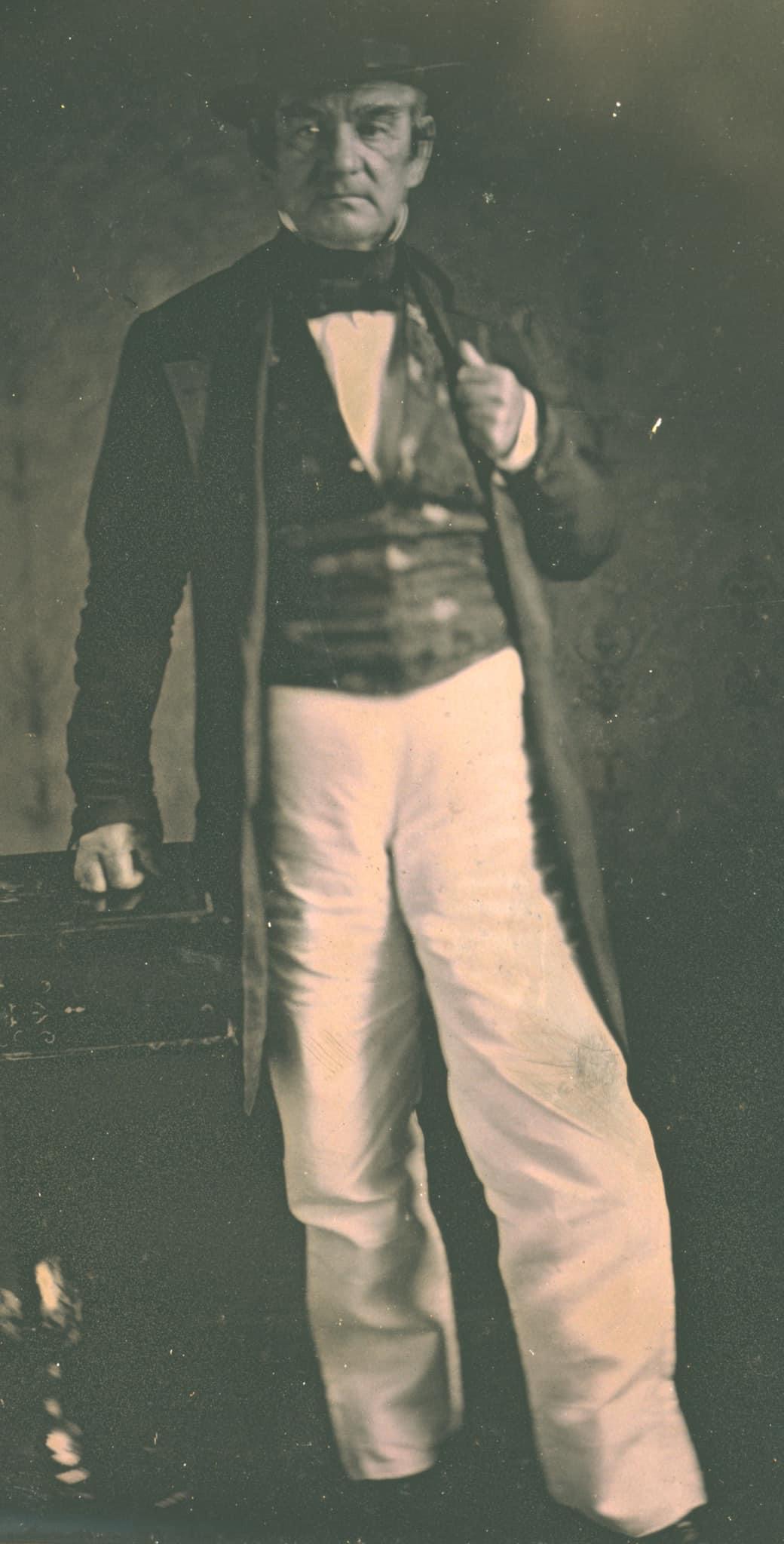
On October 3, 1790, John Ross—known in Cherokee as Guwisguwi, or “Mysterious Little White Bird”—was born at Turkeytown, in Cherokee territory along the Coosa River in what is now Alabama. The son of Scottish merchant Daniel Ross and Mary McDonald Ross, who was of mixed Cherokee and Scottish ancestry, he was raised within the Cherokee community while also receiving a formal education. That experience helped prepare him to navigate both Cherokee political life and the expanding power of the United States.
Elected Principal Chief of the Cherokee Nation in 1828, Ross led his people during one of the gravest crises in Cherokee history: the accelerating seizure of Cherokee lands by settlers and state governments, followed by President Andrew Jackson’s Indian Removal Act. Ross became the leading political voice for Cherokee sovereignty, using diplomacy, petitions, treaty negotiations, and legal advocacy to resist removal.
The Cherokee struggle helped produce the landmark Supreme Court decision in Worcester v. Georgia in 1832, which held that Georgia’s laws had no force within Cherokee territory. Yet the decision did not stop removal. Federal and state authorities ultimately compelled the Cherokee people to leave their southeastern homeland in 1838 and 1839. Ross accompanied the removal parties west on the journey now remembered as the Trail of Tears; an estimated 4,000 Cherokee people died, including his wife, Quatie, who died of pneumonia near Little Rock.
After removal to present-day Oklahoma, Ross helped reunify and rebuild the Cherokee Nation, whose government adopted a new constitution in 1839. He remained its central political leader through internal divisions, reconstruction, and the upheaval of the Civil War, serving until his death in 1866. John Ross’s birth marked the arrival of a statesman whose determined defense of Cherokee self-government and sovereignty remains a defining chapter in Indigenous political history.
Image credit: Historical daguerreotype of Principal Chief John Ross, courtesy of the Library of Congress; no known restrictions.
