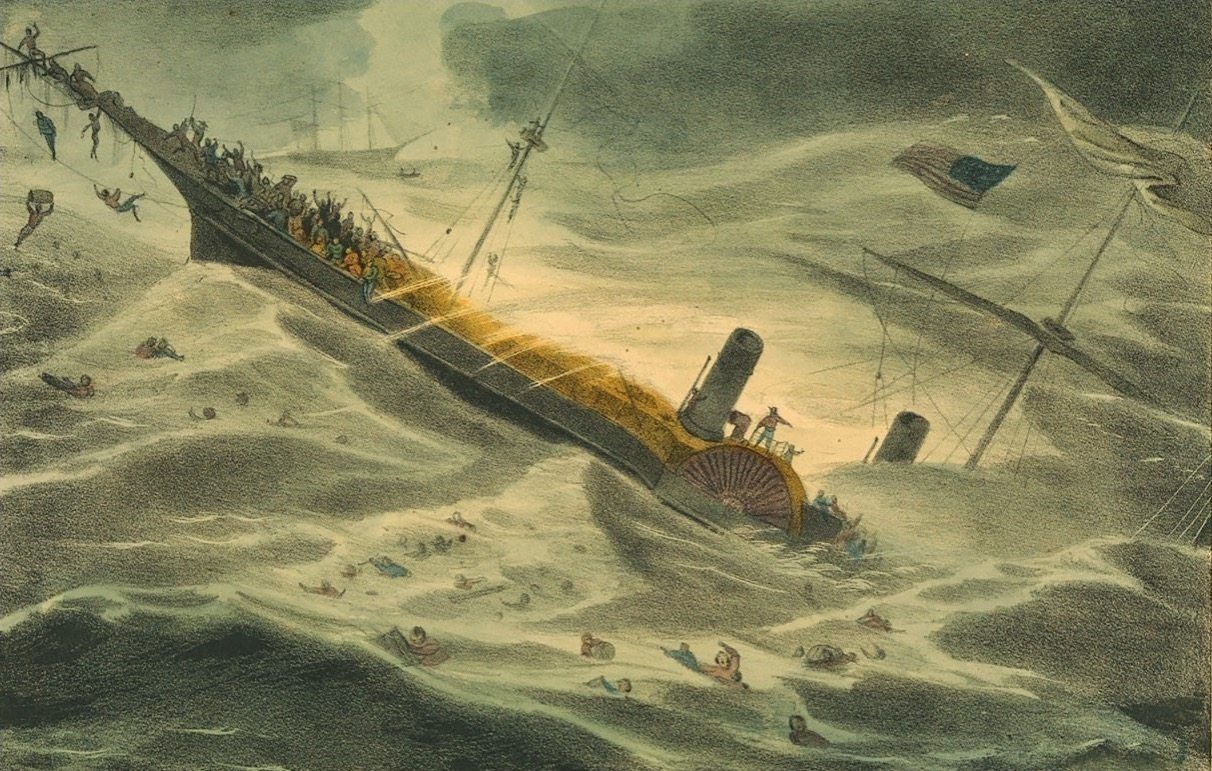
On September 12, 1857, the side-wheel steamship SS Central America sank in a powerful hurricane about 200 miles off Cape Hatteras, North Carolina. The vessel, traveling from Panama to New York via Havana on a major mail and passenger route, foundered after battling heavy seas and taking on water for days. About 425 of the 578 passengers and crew members aboard died in the disaster.
The Central America was carrying approximately 30,000 pounds—about 15 tons—of California Gold Rush gold, including commercial shipments intended for East Coast financial institutions. Valued at more than $1.5 million at the time, the loss of that cargo undermined confidence during the unfolding Panic of 1857 and helped deepen the financial crisis, which brought bank suspensions, business failures, factory closures, and unemployment.
Known afterward as the “Ship of Gold,” the wreck was located in 1988. Subsequent deep-sea recovery expeditions retrieved gold coins, bars, and other artifacts valued in the millions, as well as remarkably preserved nineteenth-century daguerreotypes from the ocean floor.
Images: An illustration of the sinking (above) and a remarkably well-preserved daguerreotype recovered from the wreck (below), via Wikimedia Commons. Both images are in the public domain in the United States.