
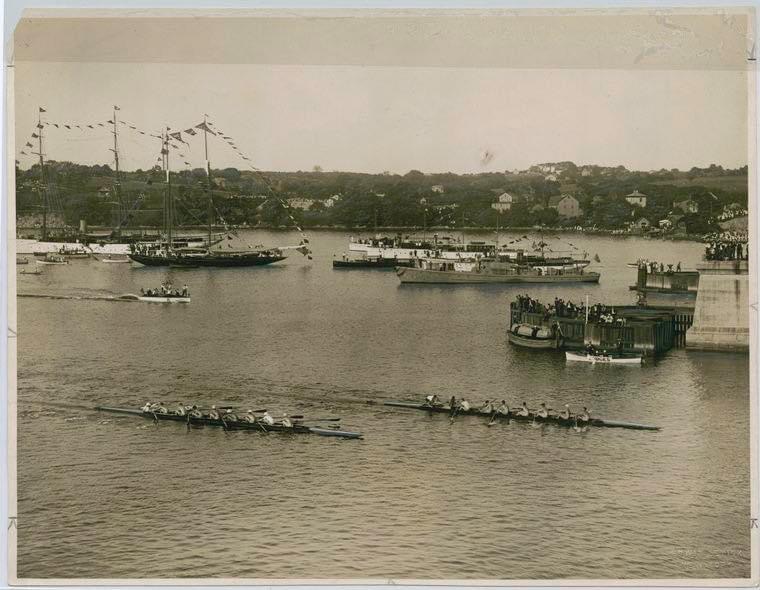
On August 3, 1852, the first intercollegiate athletic competition in the United States took place on Lake Winnipesaukee, N.H., when Harvard and Yale met in a two-mile rowing race. Former senator Franklin Pierce—soon to be elected president and inaugurated in 1853—presented the trophy to the winners. The event was essentially a marketing stunt by James N. Elkins, a railroad executive who wanted to promote his line and the lake as a summer destination; he covered transportation, lodging, and expenses for both crews if they agreed to race.
Harvard’s Oneida beat Yale’s Shawmut by about two lengths, claiming a pair of ornate, silver-mounted black walnut oars. That one regatta laid the groundwork for what would become the massive, multi‑billion‑dollar enterprise of American college sports.
