
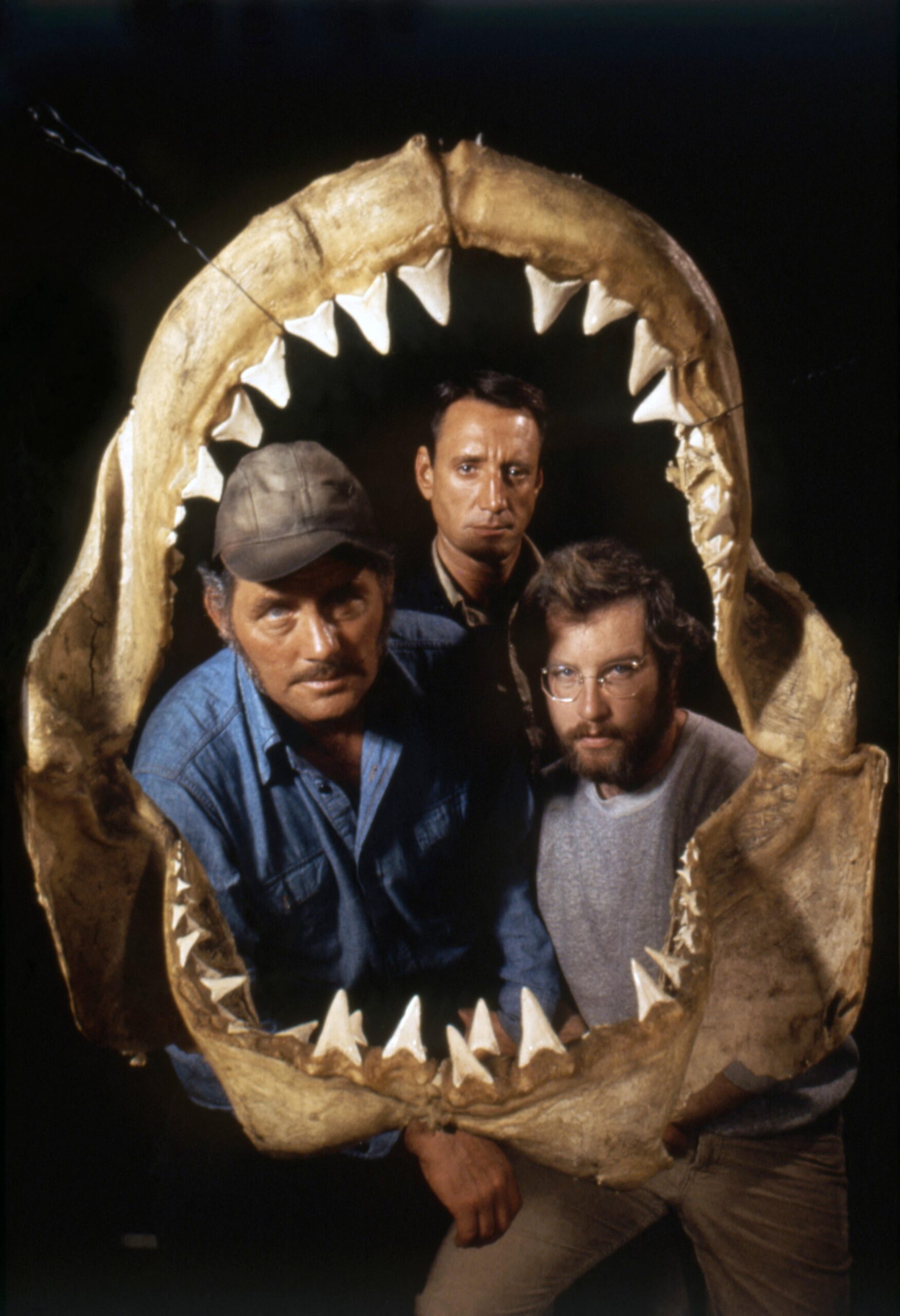
On June 20, 1975, Jaws crashed into American culture and permanently reshaped Hollywood, but the tension audiences felt on screen wasn’t only the result of a temperamental mechanical shark. It reflected the very real creative friction among the film’s three leads as they spent long, weather-beaten weeks aboard the Orca off Martha’s Vineyard. Robert Shaw, the seasoned actor behind the formidable shark hunter Quint, often challenged and provoked his younger co-star Richard Dreyfuss, creating a spirited rivalry that became one of the production’s defining dynamics. While Dreyfuss has since emphasized that the conflict has been exaggerated over time, the lively back-and-forth between them undeniably shaped the atmosphere on set, while Roy Scheider—playing the steady Sheriff Brody—remained a calm, observant presence navigating the long days at sea while Spielberg worked around a shark that rarely cooperated.
The terror Spielberg captured on screen was uniquely heightened by the peaceful reality of New England beach culture at the time, where Cape Cod’s waters saw almost no great white sharks at all due to decades of hunting that had devastated both the apex predators and their primary prey, gray seals. That reality has since transformed; after federal protections allowed seal populations to rebound, great white sharks returned in large numbers, turning modern Cape Cod into one of the world’s most closely studied white shark hotspots. The result is a striking irony: what audiences embraced in 1975 as thrilling fiction now mirrors a coastline where apex predators have become a routine part of beach life, leaving the legacy of Jaws with an unexpected layer of truth for modern New Englanders who share their waters with the very creature that once seemed like pure Hollywood imagination.
Image: Robert Shaw, Roy Scheider, Richard Dreyfuss for Jaws 1975 directed by Steven Spielberg via Alamy
