
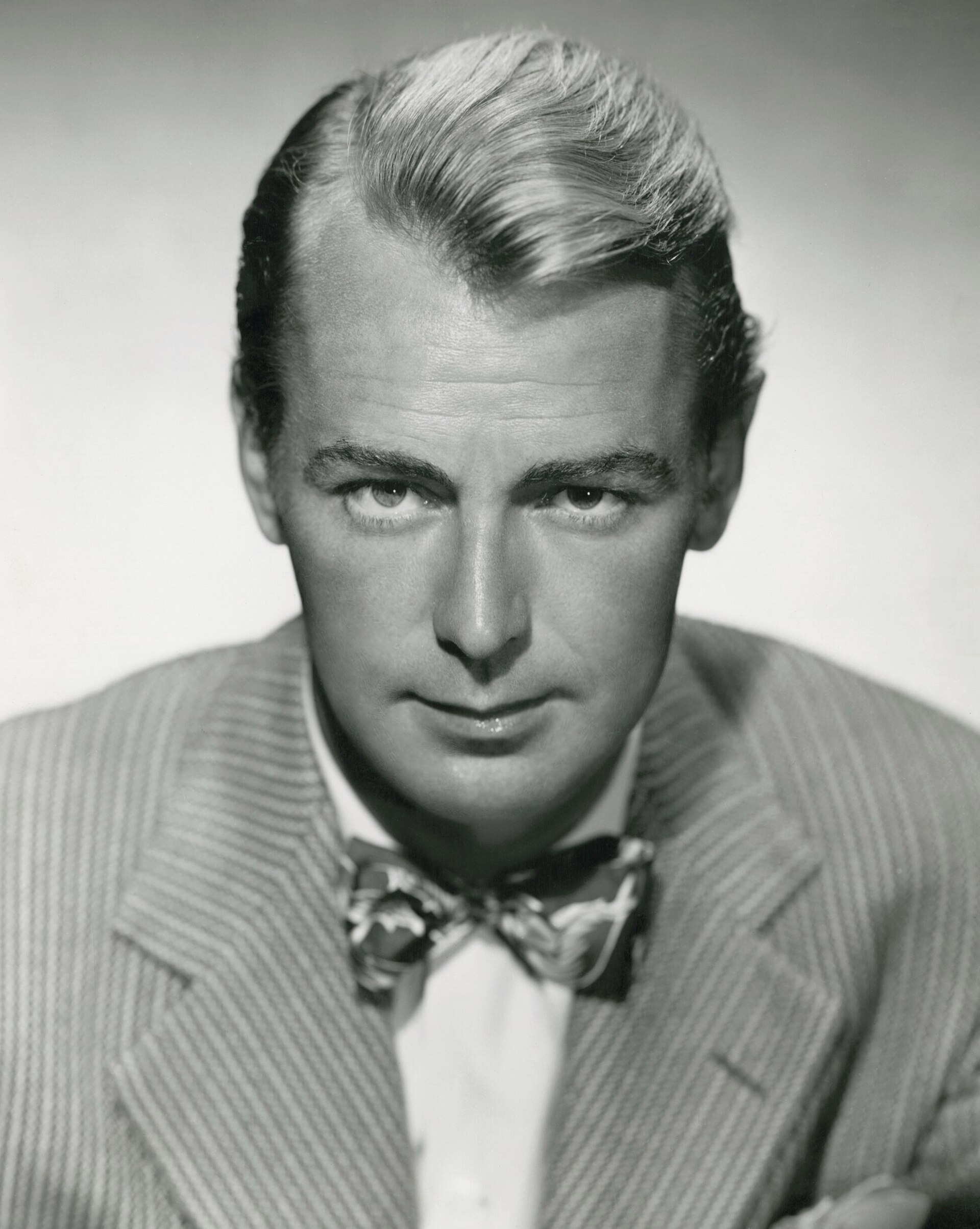
On September 3, 1913, Alan Ladd was born in Hot Springs, Arkansas. He would grow into one of Hollywood’s most distinctive stars: a blond, soft-spoken presence whose reserve could suggest menace, pain, or moral conflict with remarkably little dialogue.
Ladd broke through in Frank Tuttle’s 1942 crime thriller This Gun for Hire, playing Philip Raven, a professional killer betrayed by the men who employ him. The film helped establish Ladd as a screen presence of unusual force, while his pairing with Veronica Lake proved immediately compelling to audiences. Ladd and Lake would go on to make four films together, including the noirs The Glass Key and The Blue Dahlia.
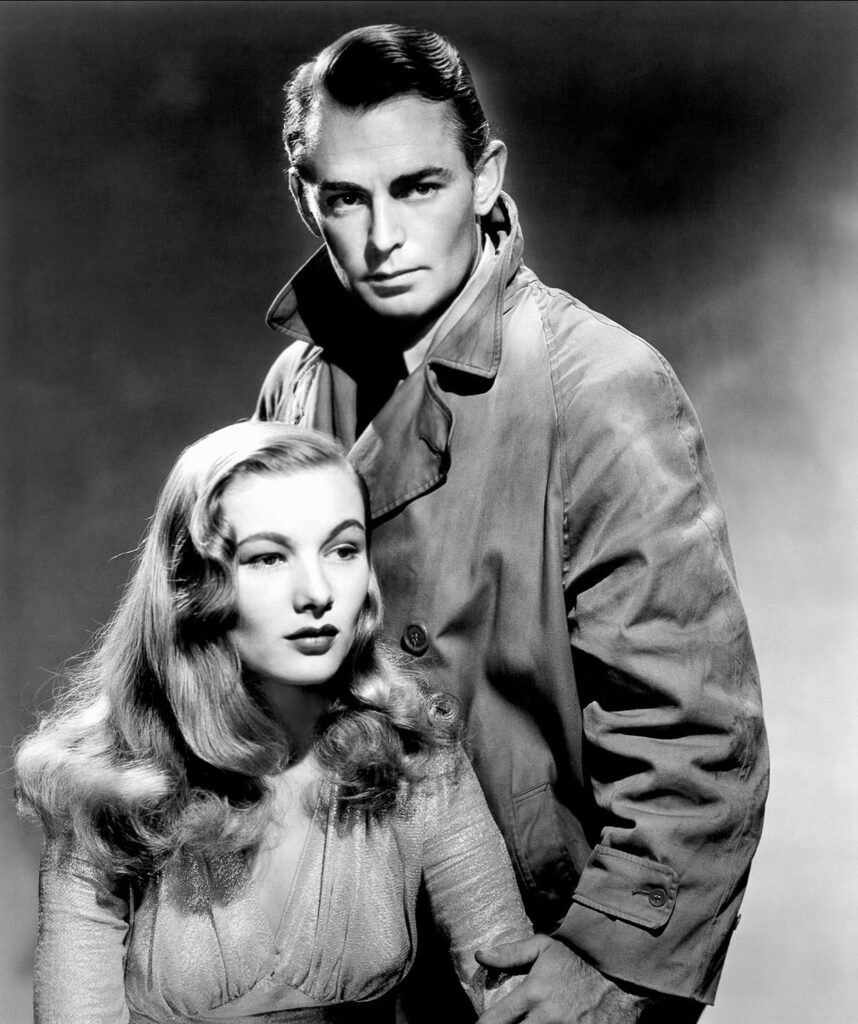
His persona was built on restraint. Rather than the broad swagger associated with many studio-era leading men, Ladd often played guarded, solitary figures—men who seemed to carry violence and vulnerability just beneath a calm exterior. That quality served him especially well in noir, adventure films, and Westerns, and helped make him one of the most popular American stars of the late 1940s and early 1950s.
In 1953, Ladd gave what is widely regarded as his signature performance in George Stevens’s Shane. As the mysterious gunfighter who rides into a conflict between homesteaders and a cattle baron, he created an enduring Western archetype: the quiet hero whose decency is inseparable from his capacity for violence. Shane remains the role most closely associated with him.
Ladd’s stature also became part of his Hollywood mythology. Sources vary on his exact height, generally placing him around 5 ft. 5 in. to 5 ft. 7 in. Like many actors working within the studio system, he was sometimes photographed and staged to preserve a more imposing screen image. His chemistry with the petite Veronica Lake—often listed at about 4 ft. 11 in.—also made them a visually natural pairing. The result was a star whose physical scale mattered far less on screen than the cool, wounded intensity of his gaze.
