
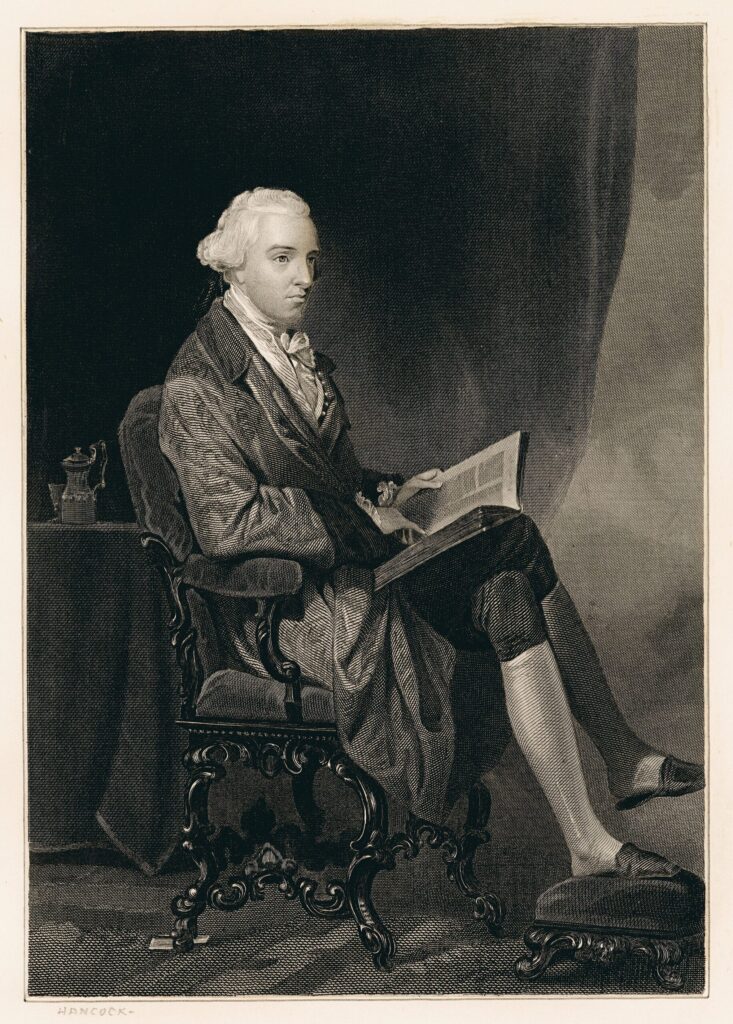
On May 24, 1775, John Hancock became President of the Continental Congress. During his first term, which lasted over two and a half years, Hancock oversaw the adoption of the Declaration of Independence, famously becoming the first delegate to sign the engrossed parchment on August 2, 1776. He also led the escape of Congress to Baltimore in late 1776, avoiding British capture as the war intensified. Additionally, he supported the development of the Articles of Confederation and helped manage Revolutionary War efforts, ensuring supplies and strategy for the Continental Army. Over ten years later, in 1785, Hancock became the President of the Confederation Congress, marking his second Congressional leadership term. He also named his only son, John George Washington Hancock, who was born in 1778 and lived only until the age of 9, in honor of George Washington.
A fascinating layer to this timeline is that Hancock’s legendary large signature was not an act of theatrical defiance toward the King, nor was it required to “validate” the Declaration on July 4 — because no one signed the document that day. As the document notes, “he was the only person to sign the document on July 4th,” but in reality, the July 4 version was the printed Dunlap Broadside, which bore no handwritten signatures at all. Hancock’s bold autograph appeared weeks later on the formal engrossed copy, where its size reflected his flamboyant handwriting style rather than a practical necessity.
Furthermore, the stressful congressional escape to Baltimore that he ordered was so rushed and chaotic that the delegates found the new temporary capital utterly miserable, complaining that the muddy streets and expensive lodgings made it feel more like a punishment than a sanctuary.