
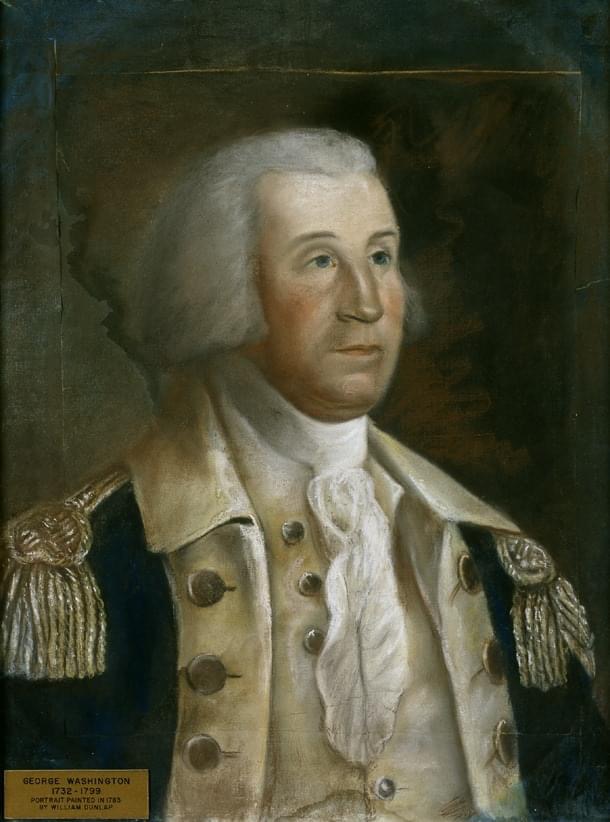
In farewell orders dated November 2, 1783, General George Washington addressed the Armies of the United States from Rockingham, his temporary headquarters near Princeton, New Jersey. With the Treaty of Paris signed and the war ending, the army faced a difficult transition to peace, its service marked by hardship and unresolved claims for pay. Washington praised the soldiers’ perseverance and urged them to carry the virtues of military service into civilian life, proving themselves “not less virtuous and usefull as Citizens, than they have been persevering and victorious as Soldiers.”
The orders formed part of a larger test of the new republic: whether an army that had secured independence would remain subordinate to civilian authority. That March, frustration over unpaid wages and pensions had brought officers at Newburgh to the brink of defying Congress. Washington’s personal intervention helped turn them away from that course. His November farewell reinforced the same principle, encouraging officers and soldiers to support the Union as they returned to civil society. On December 23, he gave that principle its clearest expression by surrendering his commission to Congress at Annapolis.
William Dunlap’s pastel portrait offers a direct connection to this transitional autumn. Just seventeen years old, Dunlap drew Washington from life during the general’s stay in New Jersey; the portrait is now in the United States Senate Collection. It records the commander not on a battlefield, but near the close of his military service. Read alongside the farewell orders and his subsequent resignation, it invites reflection on a defining aspect of Washington’s leadership: his willingness to relinquish military command and return to Mount Vernon as a private citizen. His example helped establish that victory did not entitle a commander to rule.
