
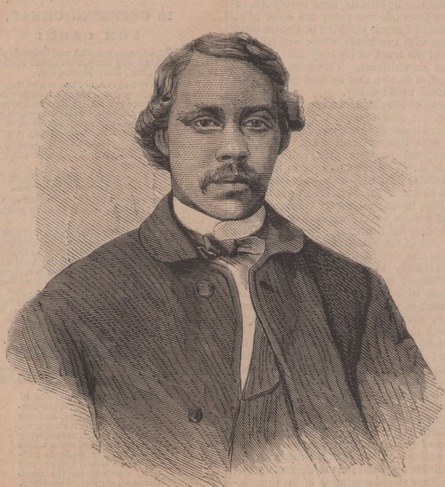
On October 16, 1833, Ebenezer Don Carlos Bassett was born in Litchfield County, Connecticut, into a prominent free Black family. Gifted with an extraordinary intellect, Bassett became the first African American student—and graduate—of the Connecticut State Normal School, now Central Connecticut State University, excelling in mathematics, classics, and languages. He went on to become an influential educator and civil rights advocate, serving as principal of the Institute for Colored Youth in Philadelphia and working alongside abolitionists such as Frederick Douglass to recruit Black soldiers for the Union Army during the Civil War.
His dedication to education and public service caught the attention of President Ulysses S. Grant after the war and the passage of the Reconstruction amendments. On April 6, 1869, Grant appointed Bassett as U.S. Minister Resident and Consul General to Haiti, making him the first African American to serve as chief of a U.S. diplomatic mission. Bassett accepted the post with a deep sense of responsibility, understanding that his performance could shape future opportunities for Black Americans in the federal government and diplomatic corps.
Bassett served in Port-au-Prince from 1869 to 1877, guiding U.S. diplomacy through a period of political instability and civil conflict in Haiti. When hundreds of refugees sought protection from political violence, he sheltered them at the U.S. diplomatic compound and negotiated their safe passage, demonstrating remarkable courage and an early commitment to humanitarian protection. This archival portrait preserves the dignified likeness of a trailblazing public servant who handled complex international relations with poise and integrity, setting a powerful precedent for generations of Black diplomats who followed.
