
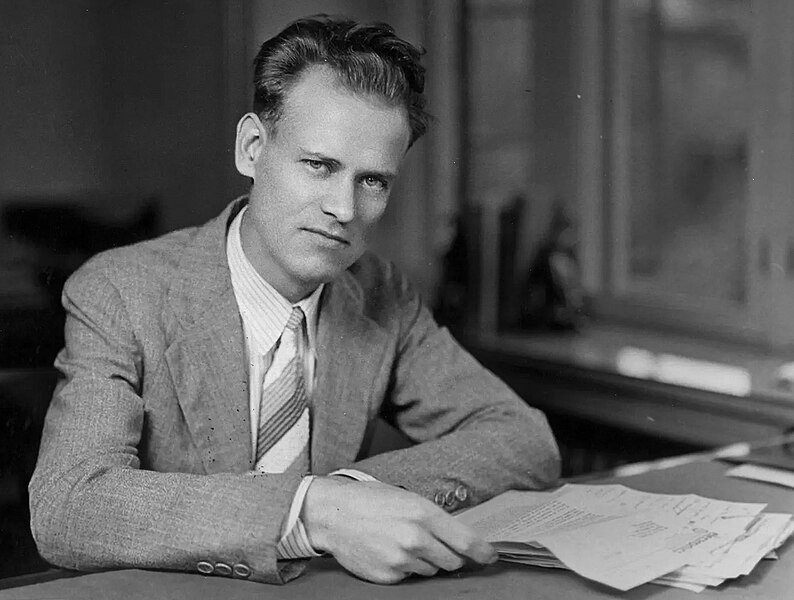
On September 7, 1927, a decisive step toward modern electronic television took place in a private laboratory at 202 Green Street in San Francisco. Twenty-one-year-old inventor Philo T. Farnsworth successfully transmitted a simple horizontal line from his experimental camera system to a receiver in an adjacent room—the first successful demonstration of his all-electronic television system.
Farnsworth had conceived the basic idea years earlier, reportedly while working on a farm in Idaho as a teenager. Rather than rely on the spinning disks and moving mechanical components used by many early television experimenters, he pursued a system that scanned images electronically. His “image dissector” tube converted a light image into an electronic signal that could be amplified and sent to a display, demonstrating that television could operate at the speed of electrons rather than mechanical motion.
The image was rudimentary, but its significance was enormous. It showed that electronic image transmission was possible and helped establish the technical direction television would take in the decades ahead. Farnsworth’s work became an important part of the development of electronic broadcasting, visual communication, and the screen-based media culture that followed.
Farnsworth also credited his wife and collaborator, Elma “Pem” Farnsworth, for her role in the work, saying, “My wife and I started this TV.” She assisted in the early laboratory efforts and later helped preserve and promote recognition of his contribution to television history.
