
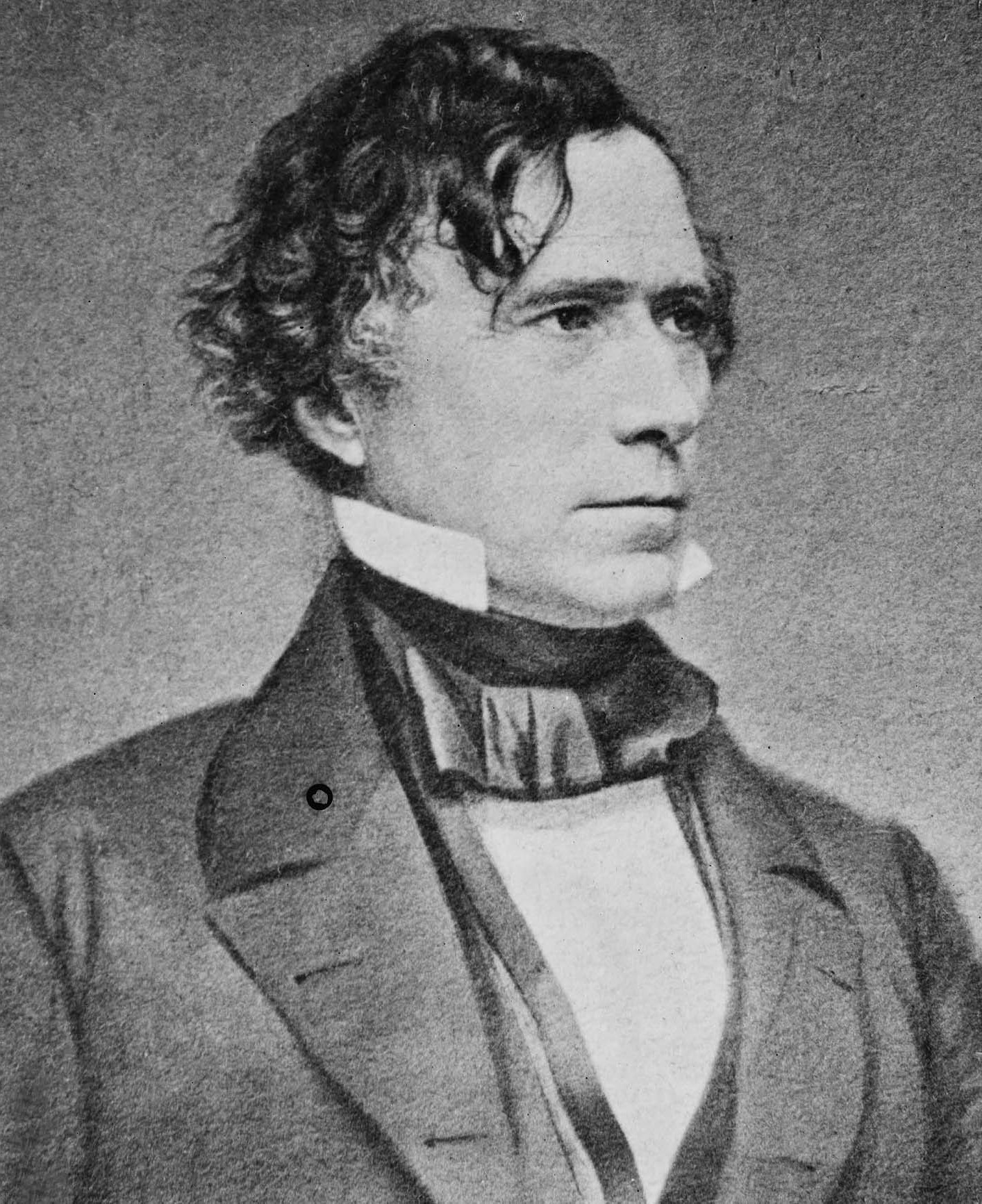
On October 8, 1869, Franklin Pierce—the fourteenth president of the United States and a former U.S. Army brigadier general during the Mexican-American War—died at his home in Concord, New Hampshire. Born on November 23, 1804, he was 64 years old. Pierce had spent much of his post-presidential life away from national office. After leaving the White House in 1857, he and his wife, Jane, traveled abroad, including stays in Madeira and Europe, before returning to Concord in 1860. There he resumed a more private life, though he did not entirely withdraw from the political controversies that soon tore the country apart.
At the outbreak of the Civil War, Pierce declared his loyalty to the Union and rejected the creation of a Southern Confederacy. In a Concord speech soon after the fall of Fort Sumter, he urged citizens to support the federal government in suppressing the rebellion. Yet Pierce remained sharply critical of President Abraham Lincoln’s conduct of the war. He opposed emancipation and condemned policies he believed threatened constitutional liberties and property rights. These views—especially his denunciation of the Emancipation Proclamation—isolated him in New Hampshire and led critics to accuse him of disloyalty. Pierce’s final decade was also marked by personal tragedy. Jane Pierce died in 1863, and his lifelong friend, the writer Nathaniel Hawthorne, died in 1864. Struggling with grief and poor health, Pierce lived increasingly in seclusion.
His earlier service in the Mexican-American War had brought him national prominence and helped propel him to the presidency in 1852. Yet his administration, especially its support for the Kansas-Nebraska Act, became closely associated with the worsening sectional conflict over slavery that preceded the Civil War. By the time of his death, Pierce was a controversial and diminished figure: a former president whose devotion to Union had coexisted with fierce opposition to the wartime policies of the administration leading that Union. President Ulysses S. Grant issued an official proclamation following Pierce’s death, directing mourning observances at the Executive Mansion and federal departments, suspending business on the day of the funeral, and ordering appropriate military and naval honors. The proclamation recognized Pierce as a former chief executive and public servant despite the controversies that had shadowed his later life.
