
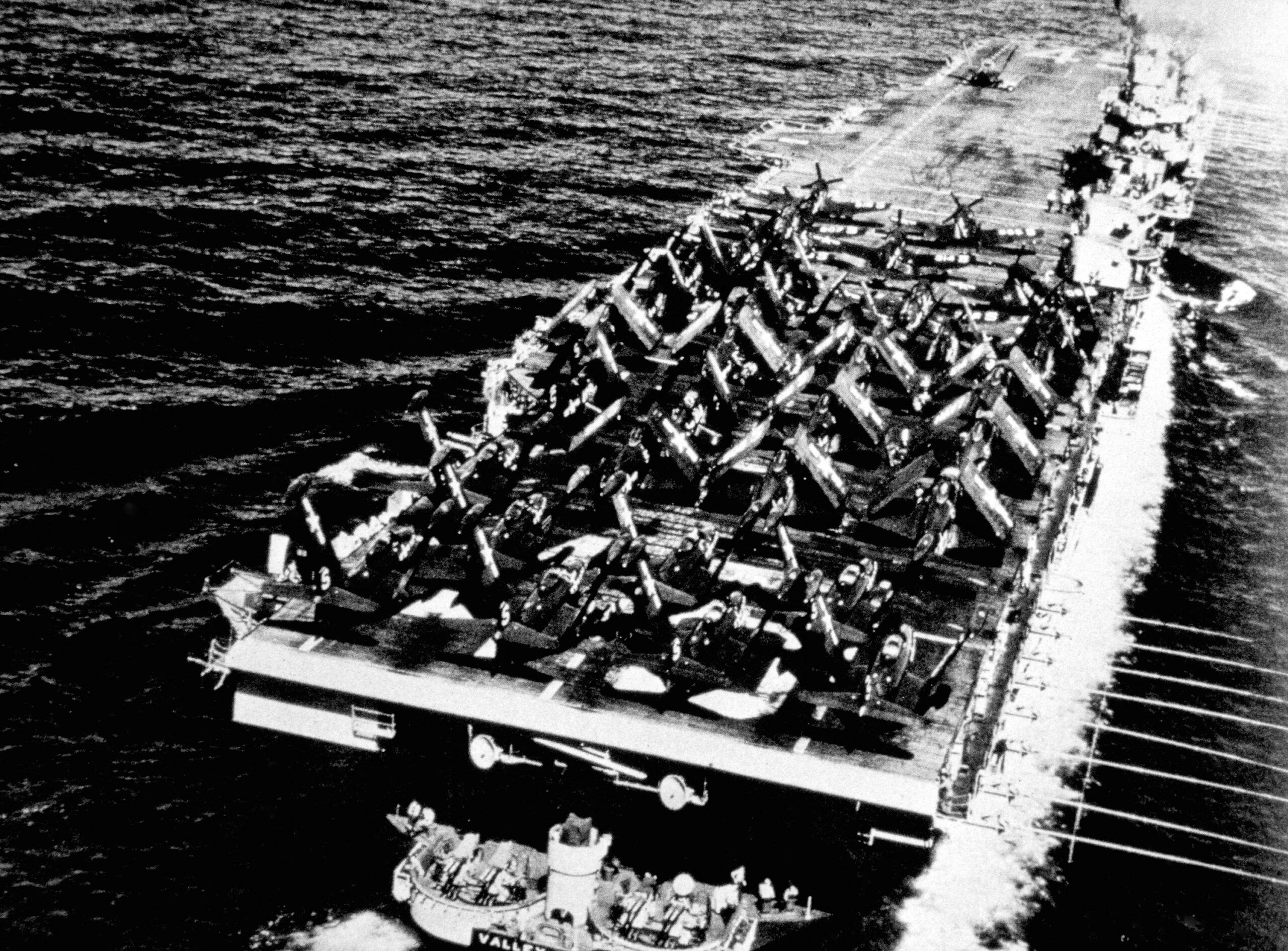
The geopolitical landscape of the twentieth century shifted violently on June 25, 1950, when North Korean forces launched a massive, coordinated invasion across the thirty-eighth parallel, triggering the outbreak of the Korean War. At that exact moment, the aircraft carrier USS Valley Forge was conducting a routine peacetime deployment in the Western Pacific, enjoying a port visit to Hong Kong. The ship was immediately ordered into active combat service, racing north toward the Korean peninsula to spearhead the American naval response.
Just over a week later, the crew of the Valley Forge made history by launching the very first carrier-based air strike of the conflict, deploying aircraft to strike strategic targets in Pyongyang. This rapid operational pivot demonstrated the critical importance of mobile naval aviation in an era of sudden, undeclared global conflicts. The carrier’s immediate deployment set a precedent for the entire war, establishing the sea lanes as the vital, secure staging grounds for United States and United Nations air superiority.
