
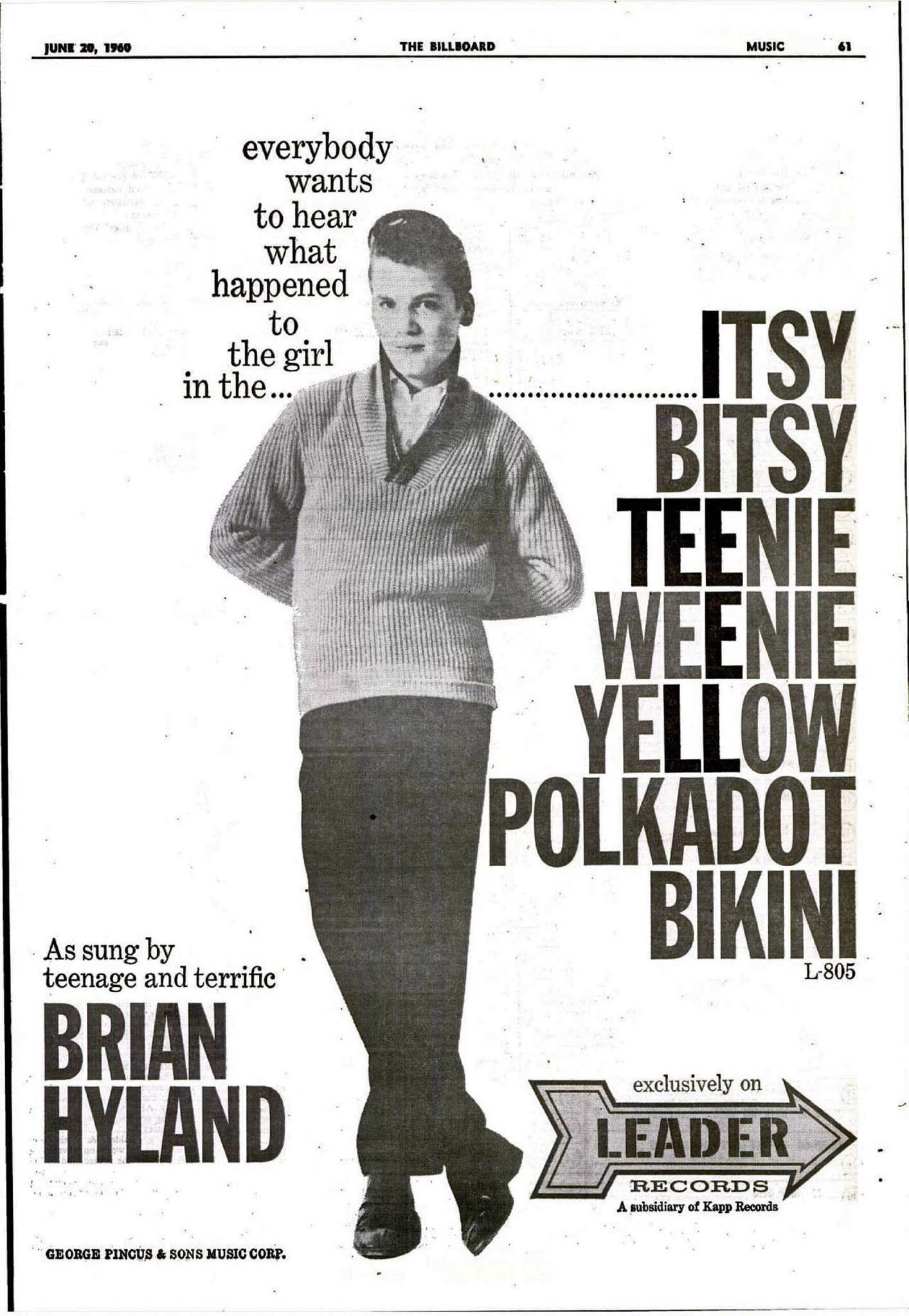
On August 8, 1960, Brian Hyland’s “Itsy Bitsy Teenie Weenie Yellow Polkadot Bikini” was #1 in the charts in the U.S.
The rise of Hyland’s playful track to the absolute peak of the pop charts marked a major, transitional turning point in postwar American consumer fashion and youth culture. Prior to the summer of 1960, the bikini was widely considered to be an scandalous, deeply controversial European import that was banned on many public beaches across the country. Hyland’s hit song, which told the story of a shy girl too terrified to step out of her locker and expose her swimsuit to the crowd, humanized the controversial garment, transforming it from a symbol of moral decay into a fun, mainstream fashion staple for a new generation of teenagers.
Beyond the catchy hook, the massive commercial success of the track sparked a historic sales boom for the swimwear industry, with millions of young women rushing to department stores to buy the exact style mentioned in the lyrics. The song successfully demonstrated the immense, shifting power of rock and roll radio to dictate mainstream American consumer behavior, turning a lighthearted novelty record into a powerful cultural engine that redefined beach fashion forever.
Image featuring Brian Hyland and song when it was released earlier that summer via Wikimedia Commons, public domain
