
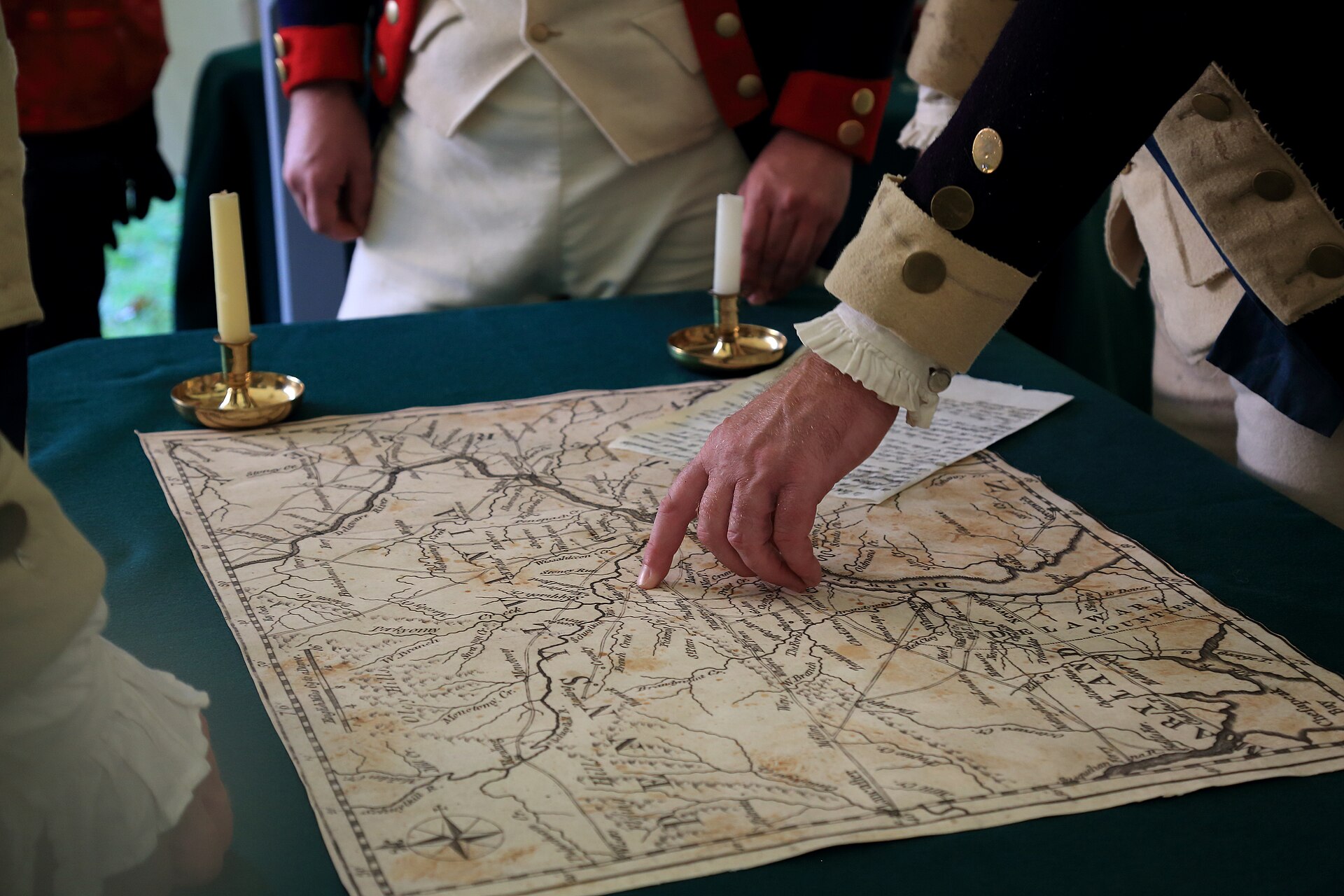
After enduring six brutal months of starvation, freezing temperatures, and rampant disease, General George Washington led his remaining Continental Army out of their winter quarters at Valley Forge, Pennsylvania, on June 19, 1778. The army had lost roughly 2,000 men to typhus, smallpox, and malnutrition. Despite the devastating losses, the soldiers who marched out were vastly different from the fractured militia that had arrived the previous December.
The hidden triumph of Valley Forge was managed from the stone walls of Washington’s Headquarters, where the Commander-in-Chief collaborated with Prussian drillmaster Baron Friedrich Wilhelm von Steuben. While Washington used this central hub to review manuals and orchestrate the upcoming campaign, von Steuben took to the open fields, drilling a model company in precise company-level formations and a standardized bayonet charge sequence to replace chaotic militia habits. By June, the army that marched out was unrecognizable from the starving force that had limped in six months earlier—disciplined, unified, and finally capable of meeting British regulars on equal terms.
Image: George Washington’s Headquarters (The Isaac Potts House) via Wikimedia Commons, no known restrictions
