
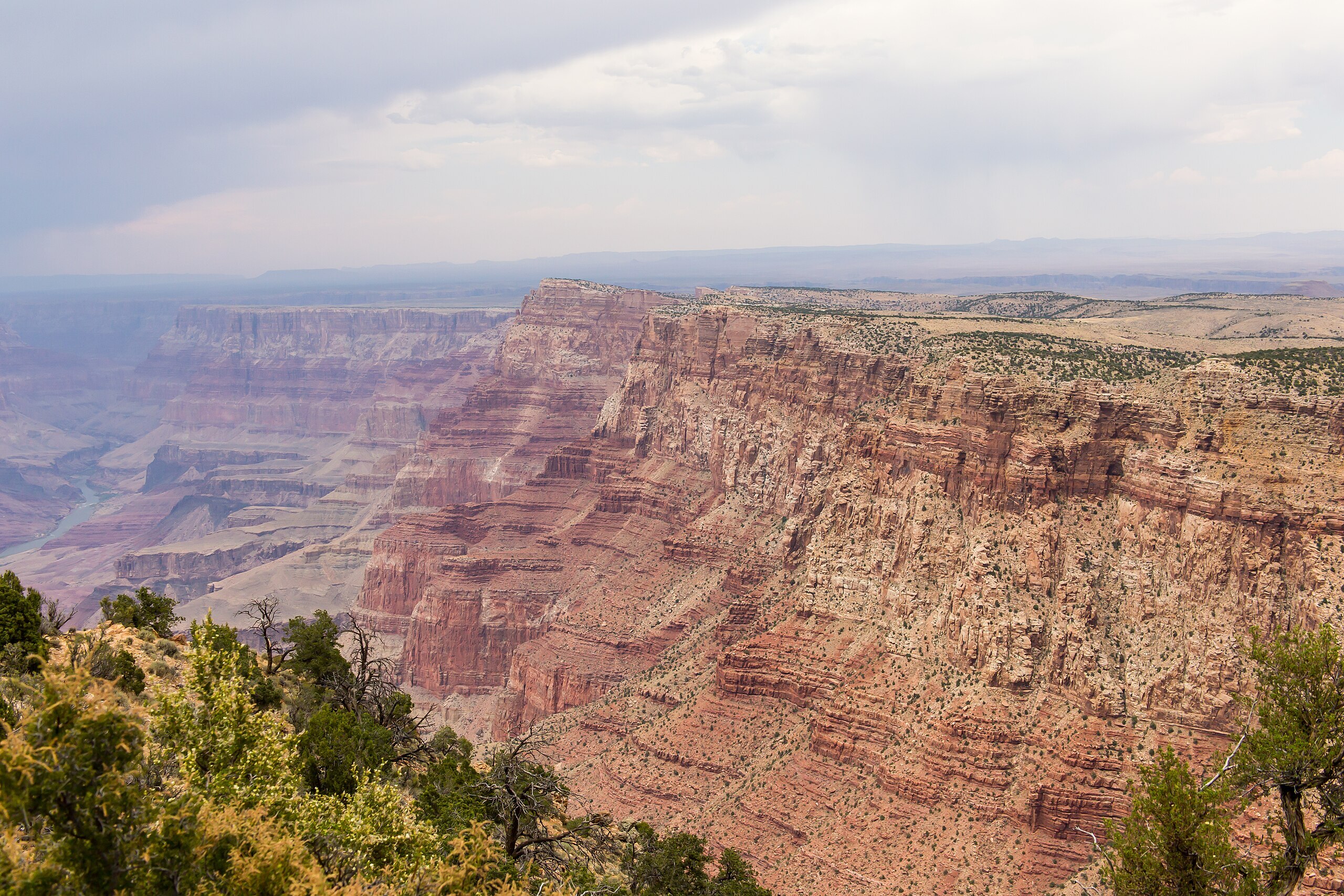
The Grand Canyon is typically defined by its intense, baking desert heat, but the late summer months bring the predictable arrival of the North American Monsoon. Across the vast expanses of Grand Canyon National Park, Arizona, on July 29, 2016, a massive storm system swept across the South Rim, unleashing torrential downpours directly into the heart of the ancient canyon. The sudden deluge triggered flash floods through narrow side canyons and sent muddy water cascading down rock faces that had been baked dry for months.
This weather event instantly transformed the sensory and visual landscape of one of the world’s greatest natural wonders. The dry, dust-choked air was replaced by the sharp scent of wet ozone, sage, and damp earth. Massive waterfalls, rarely seen by casual tourists, suddenly materialized along the sheer limestone and sandstone cliffs, plunging thousands of feet into the Colorado River below and drastically accelerating the ongoing, millions-of-years-old process of geological erosion.
These storms highlight the dynamic, living nature of an environment that many perceive as a static monument of stone. The monsoon rains bring vital life to the canyon’s isolated ecosystem, replenishing hidden springs and triggering sudden blooms of desert vegetation. For those witnessing the storm, the event served as a humbling reminder of nature’s raw power, where a serene desert landscape can instantly transform into an overwhelming showcase of elemental force.
