
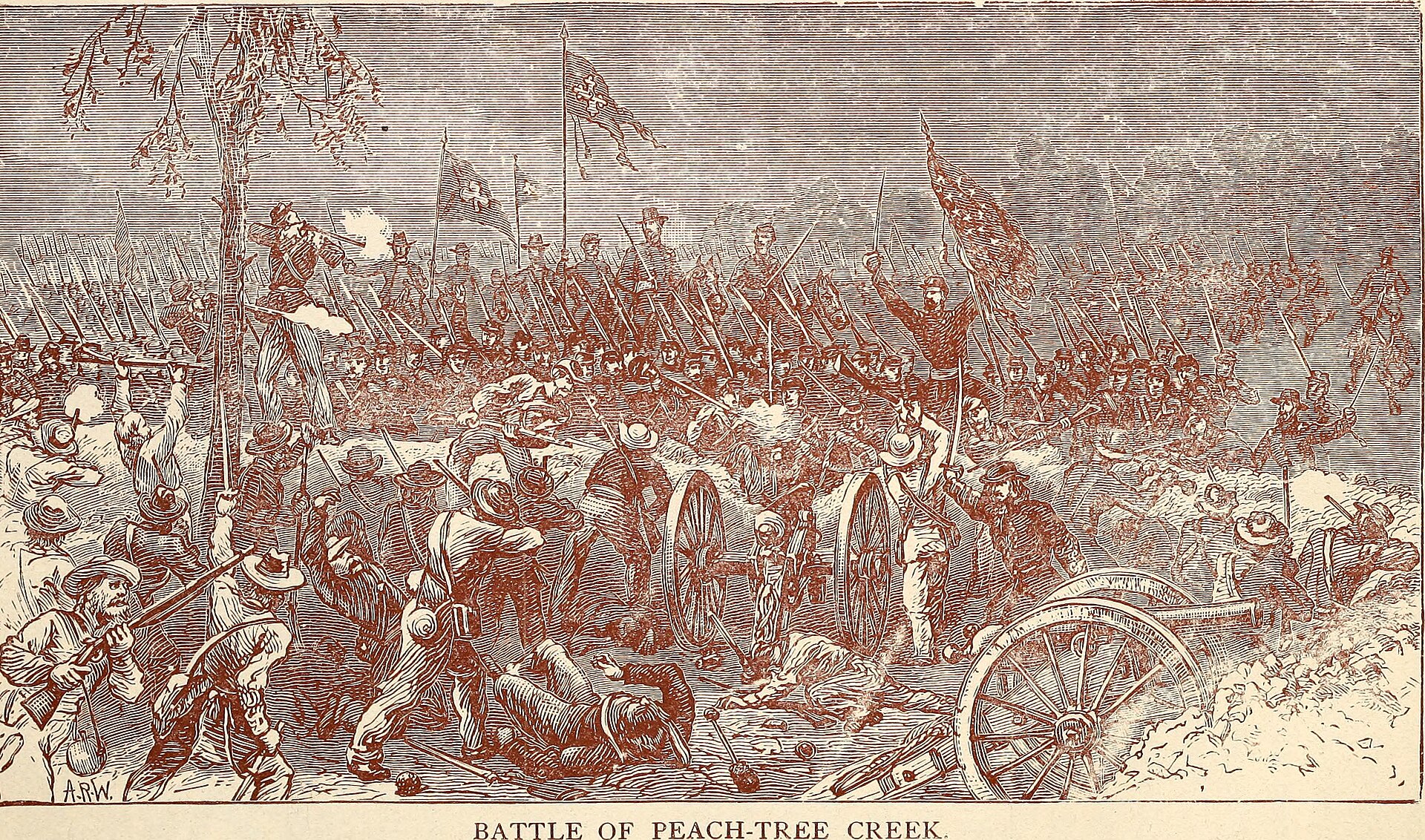
On July 20, 1864, the blood-soaked ravines north of Atlanta witnessed the brutal opening clash of the Battle of Peachtree Creek. Violent, chaotic, and tragically intimate, the fight marked the first of four major engagements that would erupt in rapid succession for control of the city, igniting the final phase of the Atlanta Campaign.
In a single afternoon, more than four thousand men fell in savage, close‑quarters combat as Confederate forces launched a desperate, poorly coordinated counterattack against Union troops mid‑crossing at the creek. When darkness settled over the battlefield, details from both armies moved through the ravines not only to retrieve the wounded, but to gather the scattered personal effects of the dead.
The true emotional weight of Peachtree Creek emerged in the days that followed. Hundreds of blood‑stained letters, diaries, and photographs—carried in the pockets of soldiers who never made it home—were recovered and sent north and south alike. For families waiting anxiously in Ohio farmhouses or Georgia cabins, the words written on the eve of July 20 became the final, haunting contact with their sons, husbands, and fathers. These intimate documents, filled with quiet prayers for peace and expressions of longing, transformed Peachtree Creek from a tactical map point into a shared national tragedy of broken homes and enduring grief.
The battle also marked a volatile strategic pivot for the Confederacy. Just three days earlier, President Jefferson Davis had replaced the cautious General Joseph E. Johnston with the fiercely aggressive General John Bell Hood. Determined to halt the retreat toward Atlanta, Hood launched an immediate, ill‑fated offensive that shattered the Army of Tennessee’s morale and expended irreplaceable Southern manpower. The defeat at Peachtree Creek set off a domino effect that doomed Atlanta, reshaped the course of the war, and helped secure Abraham Lincoln’s reelection that November.
