
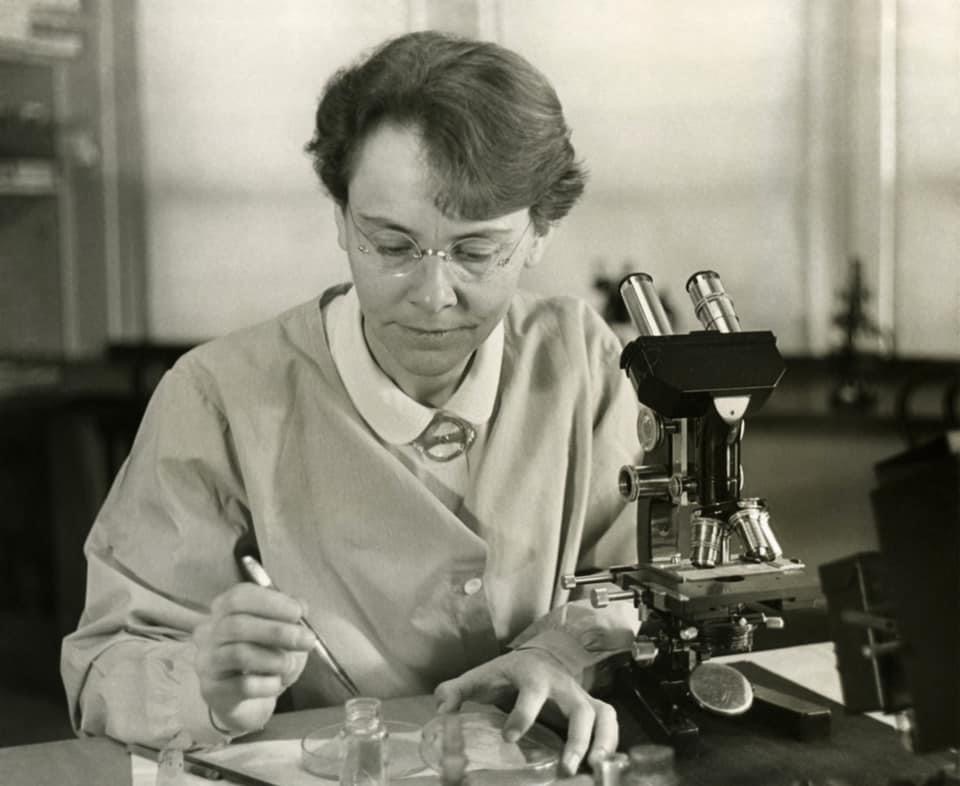
On June 16, 1902, pioneering American scientist Barbara McClintock was born in Hartford, Connecticut, embarking on a brilliant, solitary intellectual journey that would completely revolutionize the global understanding of genetics. Working in her laboratory at Cold Spring Harbor during an era when female scientists faced immense professional isolation and skepticism, McClintock utilized advanced microscopic techniques to meticulously study the chromosomes of maize plants. Through decades of independent, obsessive observation, she discovered that fragments of genetic material could actually change positions on a chromosome, a radical phenomenon she termed genetic transposition.
McClintock’s groundbreaking discovery of these jumping genes was initially met with widespread disbelief and hostility from the male-dominated scientific establishment, who firmly believed that genes were fixed, unmovable structures arranged in a permanent linear order. Undeterred by the professional silence and rejection of her peers, she continued her dedicated research, proving that these mobile genetic elements were essential for controlling how cells develop and adapt. Her extraordinary patience and unyielding adherence to her data were finally validated decades later, culminating in the 1983 Nobel Prize in Physiology or Medicine, making her the first woman to win an unshared Nobel Prize in that specific category.
