
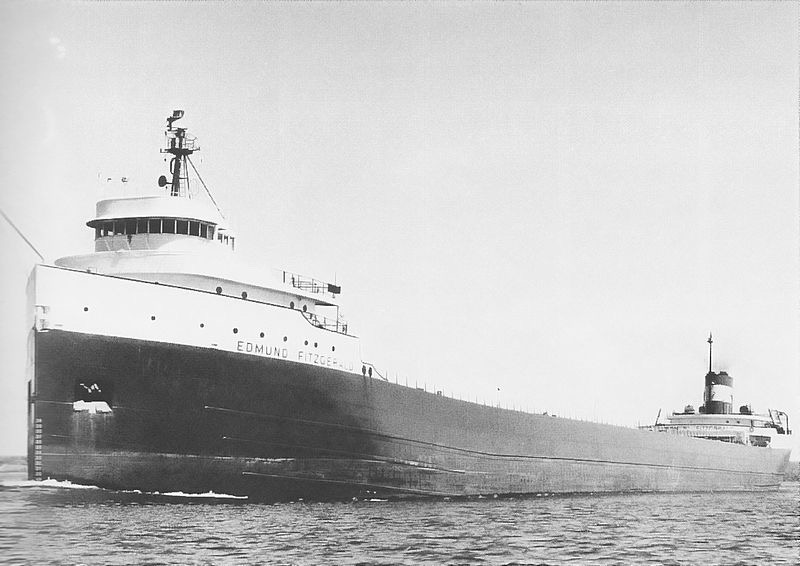
On November 10, 1975, the American freighter Edmund Fitzgerald sank in Lake Superior during a violent autumn storm, taking all twenty-nine crew members with it. The 729-foot vessel disappeared without transmitting a distress signal. Nearby, the freighter Arthur M. Anderson encountered waves estimated at twenty-five to thirty-five feet. Once the largest vessel on the Great Lakes, the Fitzgerald became the subject of investigations and enduring debate over how a ship of its size could have been overwhelmed so suddenly.
Gordon Lightfoot’s 1976 ballad carried the tragedy far beyond the Great Lakes, but the sinking also belonged to a longer history of maritime danger around Whitefish Point. Investigators focused on flooding and the vulnerability of the ship’s hatch covers, although they differed over the precise sequence of failure. The Coast Guard emphasized water entering through ineffective hatch closures; the National Transportation Safety Board concluded that earlier flooding left the vessel more exposed to boarding seas, leading to the collapse of one or more covers and catastrophic flooding of the cargo hold. The exact circumstances remain disputed.
The loss helped bring changes to Great Lakes shipping, including requirements for survival suits and depth-finding equipment, revised loading rules, and more frequent inspections. Its legacy lies not in the end of industrial navigation, but in a clearer recognition of its limits: size and steel alone could not guarantee safety on Lake Superior. Photographs of the Fitzgerald preserve the vessel in its working life—a reminder that behind the familiar name and song were a ship, a crew, and twenty-nine lives lost.
