
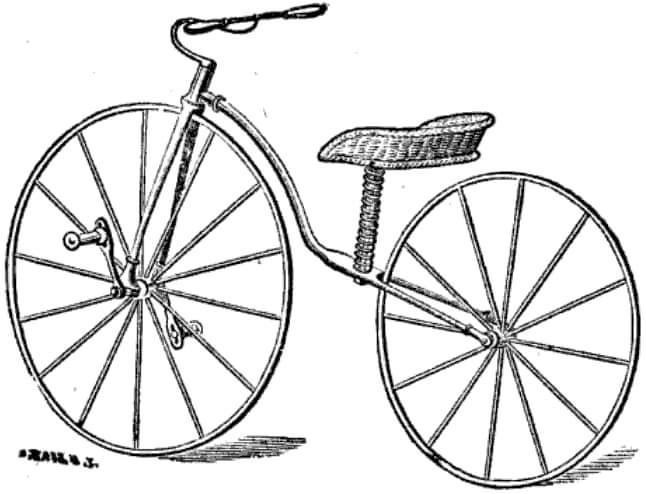
On a quiet summer day in New York, an inventor named William K. Clarkson, Jr. secured a patent for a clunky, wooden contraption he called a velocipede. This primitive machine lacked pedals, chains, or brakes, requiring riders to awkwardly propel themselves forward by frantically pushing their feet against the dirt roads. Though it looked more like a clumsy toy than a mechanical revolution, this simple blueprint planted the literal seed for what would eventually evolve into the modern bicycle, forever altering human transportation.
What makes Clarkson’s early patent so remarkable is how it anticipated a massive wave of social liberation that he would never live to see. Decades later, when the refined bicycle finally exploded in popularity during the late 19th century, it did far more than just speed up the daily commute. It became a powerful tool for women’s emancipation, granting young women unprecedented physical mobility and shredding rigid Victorian dress codes in favor of practical bloomers. A humble patent meant for a simple wooden hobby horse unintentionally broke open the doors to modern athletic and social freedom.
Image from USMC Archives via Wikimedia Commons
