
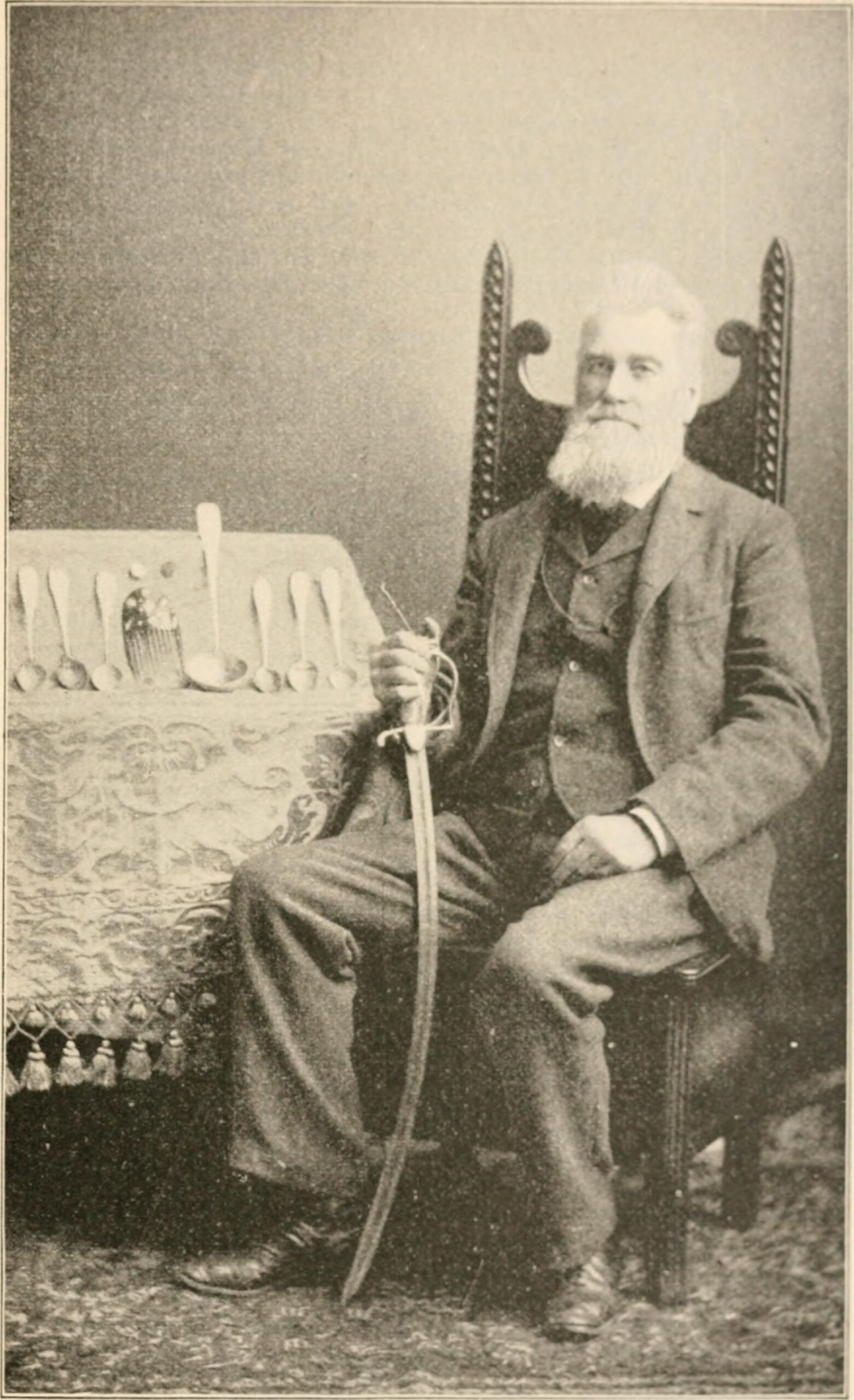
Darius Heald (1822–1904), son of Captain Nathan Heald, who commanded Fort Dearborn during its evacuation on August 15, 1812. The War of 1812 had drawn U.S. forces into a volatile frontier, where British alliances with Native nations—including the Potawatomi—challenged American expansion. As Heald’s column departed the fort, it was attacked near the Chicago River. The fort was destroyed. Half the party was killed, including William Wells, Heald’s brother-in-law and interpreter. In this portrait, Darius holds a sword—its meaning unmistakable. It stands as a marker of inherited duty, shaped by conflict and survival. The formal setting suggests stability; the blade, a reminder of a day marked not by victory, but by violence, displacement, and the contested memory of a young republic.
The artifact Darius cradles in this portrait is the very battle-sword his father wielded on that bloody August afternoon, serving as an executive link to one of the most polarizing defeats of the early frontier. When Captain Nathan Heald received urgent orders to evacuate the remote outpost, he marched out a vulnerable column of fifty-four regulars and twelve militia, heavily burdened by women, children, and a string of baggage wagons. Just a mile and a half down the shoreline, an ambush erupted among the sand dunes, trapping the retreating soldiers in a chaotic, close-quarters melee. Though Captain Heald survived his wounds and eventually bartered for his family’s release from captivity, the loss of Fort Dearborn completely severed federal authority over the Northwest Territory, turning this inherited blade into a solemn monument to the immense human cost of early American expansion.
Image via Wikimedia Commons, public domain
