
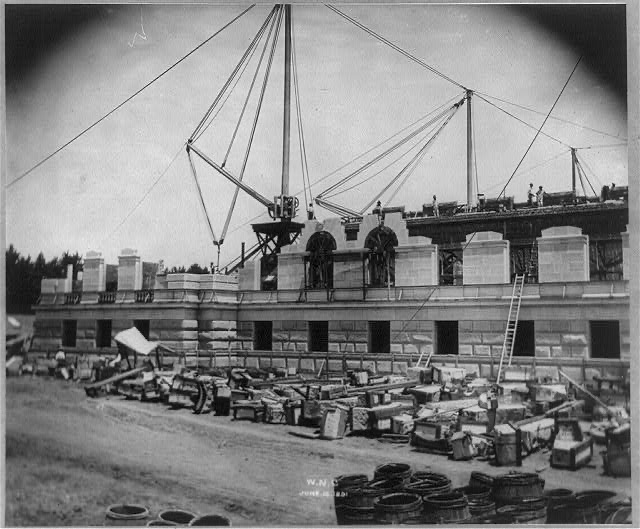
On June 16, 1891, construction crews meticulously documented a major architectural milestone as the massive granite foundations and first-floor masonry walls of the brand-new Library of Congress building were officially completed in Washington, D.C. Designed by architects John L. Smithmeyer and Paul J. Pelz, the grand structure was engineered to be a fireproof, monumental palace of knowledge to safely house the nation’s exploding collection of books, maps, and historical manuscripts. For years, the project had been plagued by severe political delays and budget overruns until Congress placed the construction under the strict, military management of Brigadier General Thomas Lincoln Casey.
The successful completion of the basement and lower floors on this summer day marked a critical turning point that allowed teams of elite American sculptors, painters, and stonecarvers to begin transforming the interior into a masterpiece of the Beaux-Arts style. Casey utilized advanced engineering techniques, including extensive iron beam framing and thick granite retaining walls, to ensure the building could support millions of tons of printed material. The steady progress on the foundation laid the direct path for the opening of what would become the largest library in the world, establishing a permanent architectural monument dedicated entirely to the intellectual preservation of American democracy.
