
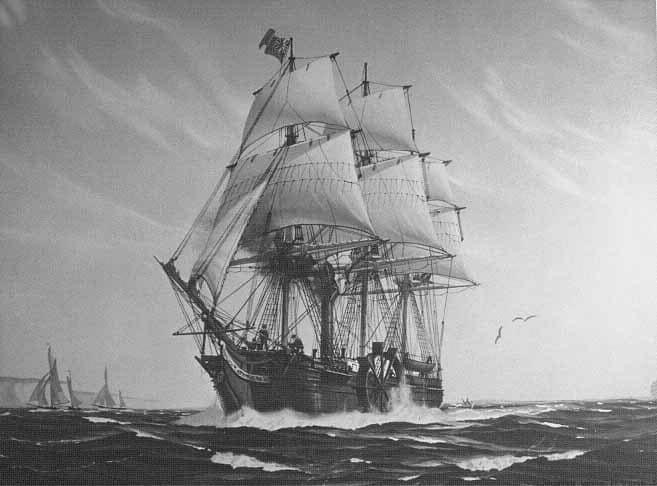
On June 20, 1819, the SS Savannah steamed into the bustling harbor of Liverpool, England, safely completing a grueling twenty-nine-day journey from Savannah, Georgia, to achieve the world’s very first transatlantic crossing by a steam-outfitted vessel. Equipped with a high-pressure steam engine and innovative, collapsible side paddlewheels, the hybrid sailing ship represented a daring, highly experimental leap forward in maritime engineering.
The hidden, deeply ironic reality of the Savannah’s historic voyage was how little she actually relied on the pioneering technology she was built to showcase. Due to the immense weight and limited storage capacity for coal, her engineers could only fire up the steam engine for roughly eighty hours—a mere 11% of the total journey—relying on traditional canvas sails for the remaining three weeks. While British authorities viewed the smoke-belching arrival with deep suspicion, even sending a cutter to investigate what they assumed was a ship on fire, the voyage proved to be a magnificent, fleeting conceptual triumph that wouldn’t see commercial success for another two decades.
(Image: US National Museum Records via Wikimedia Commons, public domain)
