
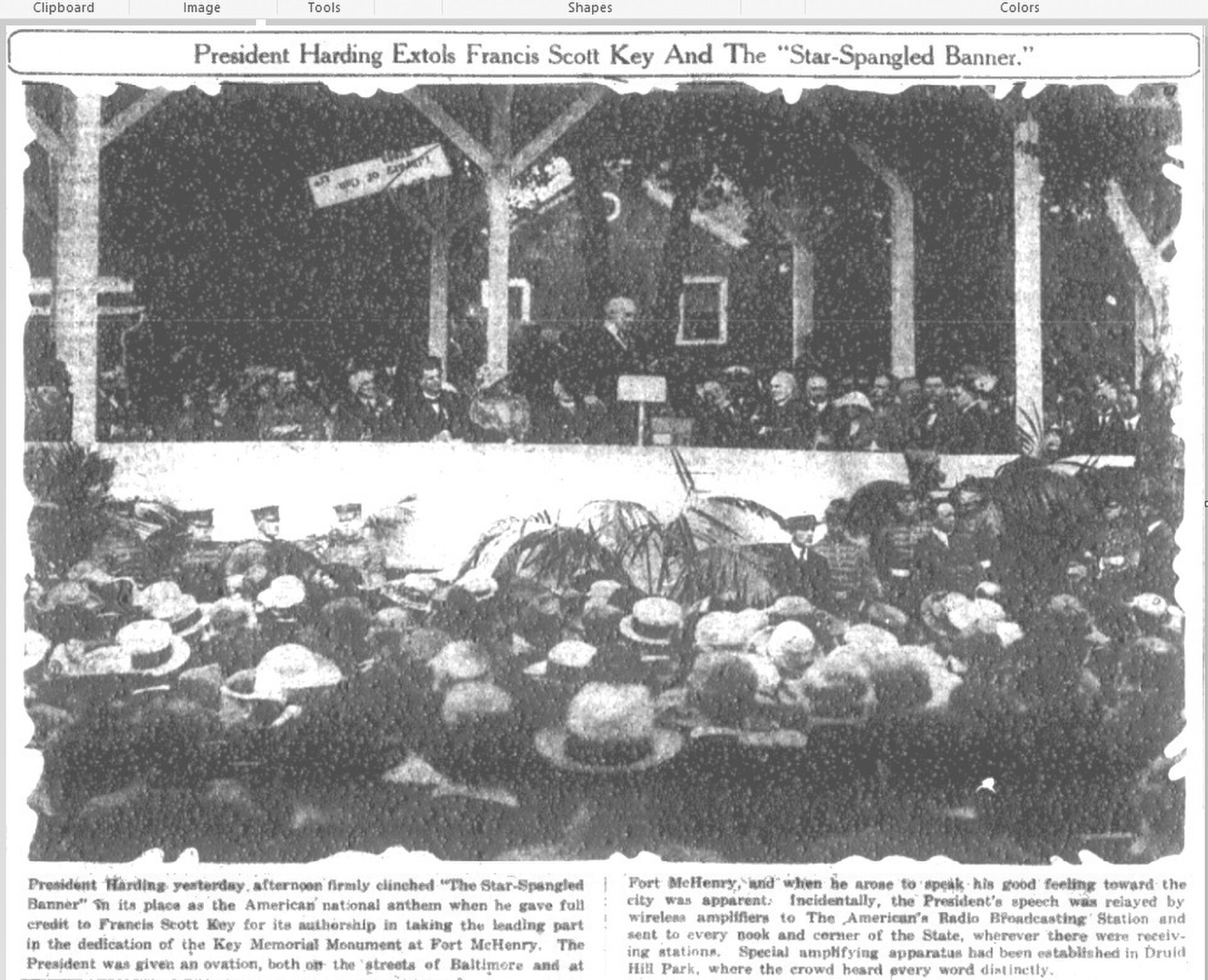
For the first time in American history, the voice of a sitting president broadcasted live across the airwaves to the public on June 14, 1922. President Warren G. Harding stepped up to a microphone in Baltimore, Maryland, to dedicate a memorial honoring Francis Scott Key, the author of The Star-Spangled Banner.
What makes this moment truly fascinating is the sheer skepticism of the era. The microphone used for the event—a primitive, boxy device—was so intimidating that engineers had to hide it inside a customized velvet-lined pulpit so Harding wouldn’t get nervous looking at it. Furthermore, because home radio receivers were still incredibly rare, the naval station broadcasting the speech actually rigged up giant, experimental horn loudspeakers on street corners across major East Coast cities. This allowed stunned pedestrians to hear the President’s booming voice seemingly materialize out of thin air, instantly launching the era of mass media politics. The successful broadcast completely transformed how commander-in-chiefs communicated with the nation, paving the way for FDR’s fireside chats and the modern era of political broadcasting.
