
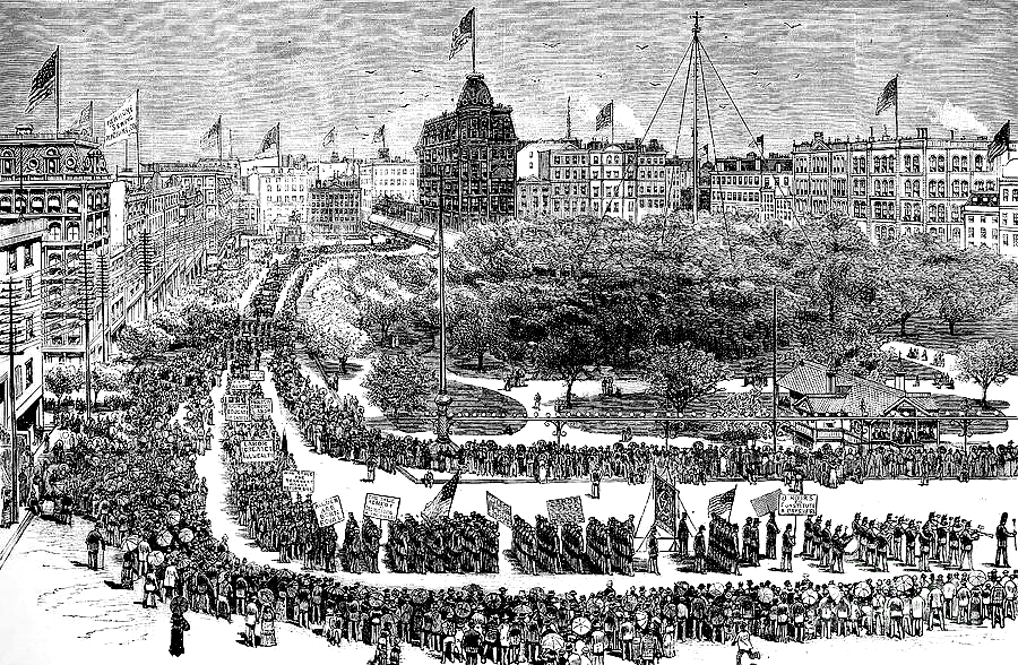
On September 5, 1882, thousands of workers—commonly estimated at about 10,000, though accounts range as high as 20,000—gathered in New York City for what is generally recognized as the nation’s first Labor Day parade. Organized by the Central Labor Union, the procession began near City Hall, passed Union Square, and ended near Reservoir Square at 42nd Street. Because Labor Day was not yet an official holiday, many participants risked losing a day’s pay by attending. The march displayed the growing visibility and solidarity of organized labor during the Gilded Age, when many workers faced long hours, low wages, dangerous workplaces, and few legal protections.
The event combined protest with celebration. Workers marched with bands and union banners, many reflecting the labor movement’s demand for a shorter workday—often expressed in the eight-hour slogan, “Eight Hours for Work, Eight Hours for Rest, Eight Hours for What We Will.” Afterward, many marchers and their families traveled to Wendel’s Elm Park near 92nd Street for speeches, music, food, and a picnic. This gathering helped establish a model for later Labork Day observances: a public demonstration of workers’ collective power paired with a celebration of working-class community. Similar observances spread nationwide, and Congress made Labor Day a federal holiday in 1894.
Image: Lithograph depicting the first Labor Day parade passing Union Square, published in Frank Leslie’s Illustrated Newspaper on September 16, 1882. Via Wikimedia Commons, public domain.
