
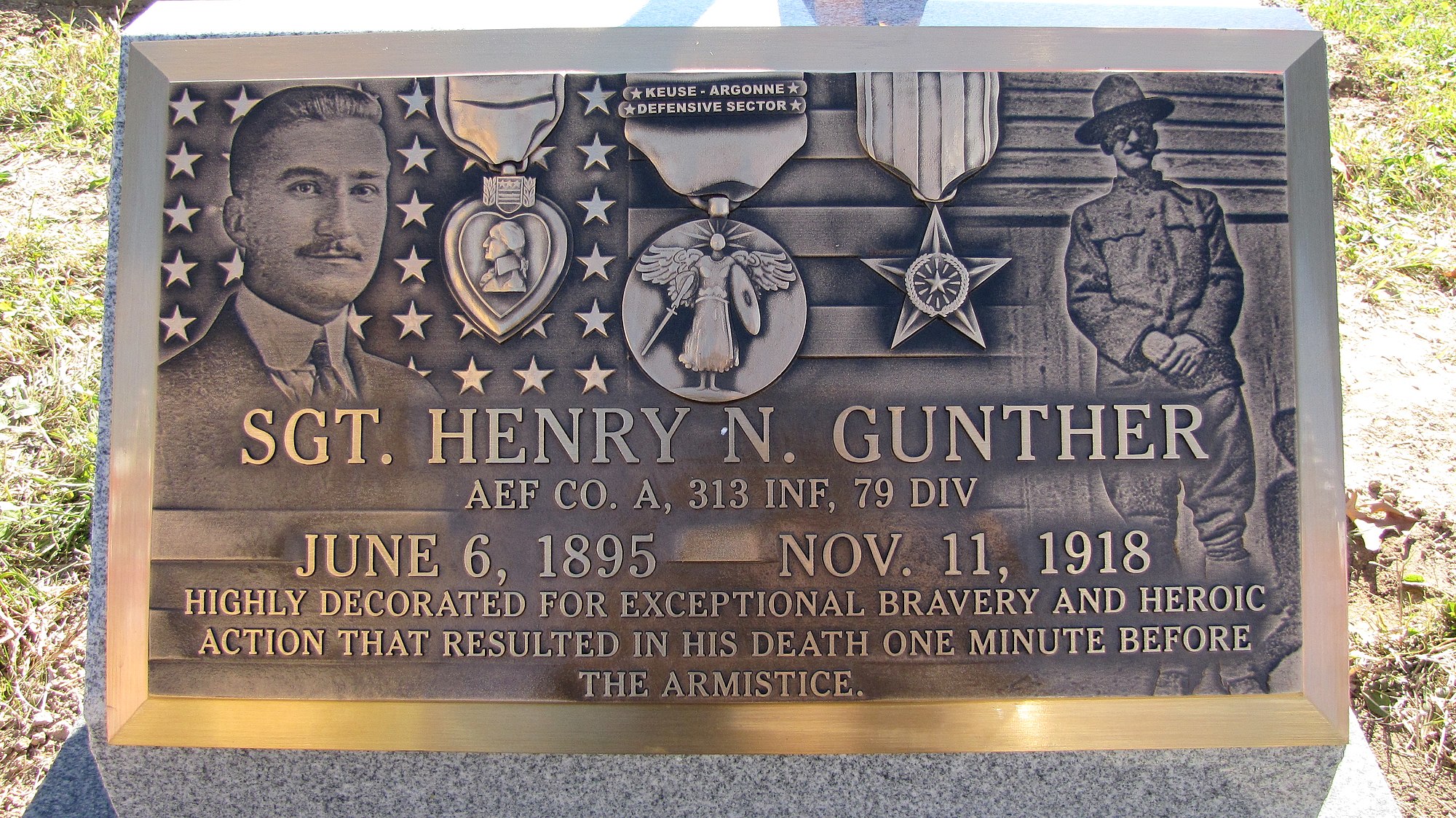
On the morning of November 11, 1918, twenty-three-year-old American Private Henry Gunther was serving with the 313th Infantry Regiment near Chaumont-devant-Damvillers, France. At eleven o’clock, an armistice would bring fighting on the Western Front to a halt. A Baltimore native of German ancestry, Gunther had recently been demoted from sergeant after military censors intercepted a letter criticizing conditions at the front and urging a friend to avoid the draft. Accounts of his final weeks suggest that the loss of his rank weighed heavily on him, though his reasons for what followed remain uncertain.
As the ceasefire approached, Gunther advanced toward a German machine-gun position with his bayonet fixed, ignoring orders to stop. Accounts describe the German soldiers waving him back. He continued forward and fired his rifle; the Germans responded with a burst of machine-gun fire, killing him. His death is generally recorded at 10:59 a.m.—one minute before the armistice took effect. He is officially remembered as the last American soldier killed in action in World War I.
Gunther’s death gives the final moments of the fighting a painful human scale. An agreement to stop the bloodshed had been reached, yet he died before it took effect. The Army later restored his rank of sergeant and awarded him the Distinguished Service Cross. Those posthumous honors lend his story a bitter irony: the recognition that some accounts suggest he had hoped to regain came only after his death.
Image: Plaque commemorating Henry N. Gunther, Most Holy Redeemer Cemetery, Baltimore, MD, from Concord via Wikimedia Commons
