
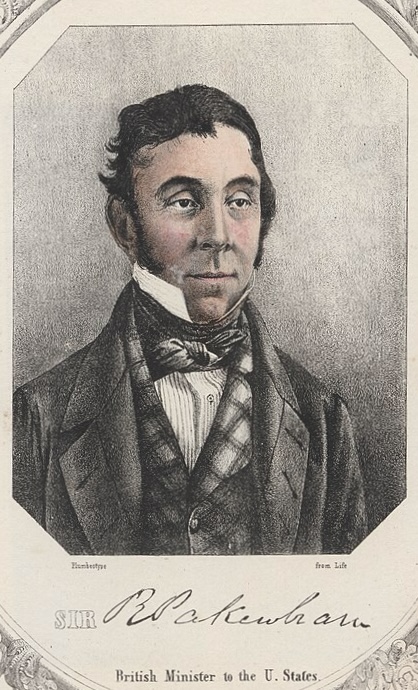
On June 15, 1846, Secretary of State James Buchanan and British Minister Richard Pakenham (shown) formally signed the Oregon Treaty in Washington, D.C., bringing a peaceful end to a decades-long, explosive border dispute between the two global powers. For years, the vast Pacific Northwest territory had been jointly occupied by both nations, but an unprecedented influx of thousands of American pioneers traveling along the Oregon Trail created intense public demands for total American sovereignty. The border crisis had reached a fever pitch during the presidential election of 1844, when expansionist Democrats rallied behind the aggressive slogan fifty-four forty or fight, threatening an open war with Great Britain if the United States did not claim the entire region up to the Alaskan border.
Recognizing that a third war with Great Britain would be catastrophic for the nation’s economy, President James K. Polk chose to bypass the radical rhetoric of his own party and negotiate a pragmatic diplomatic compromise. The resulting treaty established the forty-ninth parallel as the permanent, official boundary line between the United States and British North America, extending the continental border directly westward from the Rocky Mountains to the Pacific Ocean. The historic agreement secured federal control over what would eventually become the states of Oregon, Washington, and Idaho, peacefully expanding the territorial footprint of the United States from coast to coast.
