
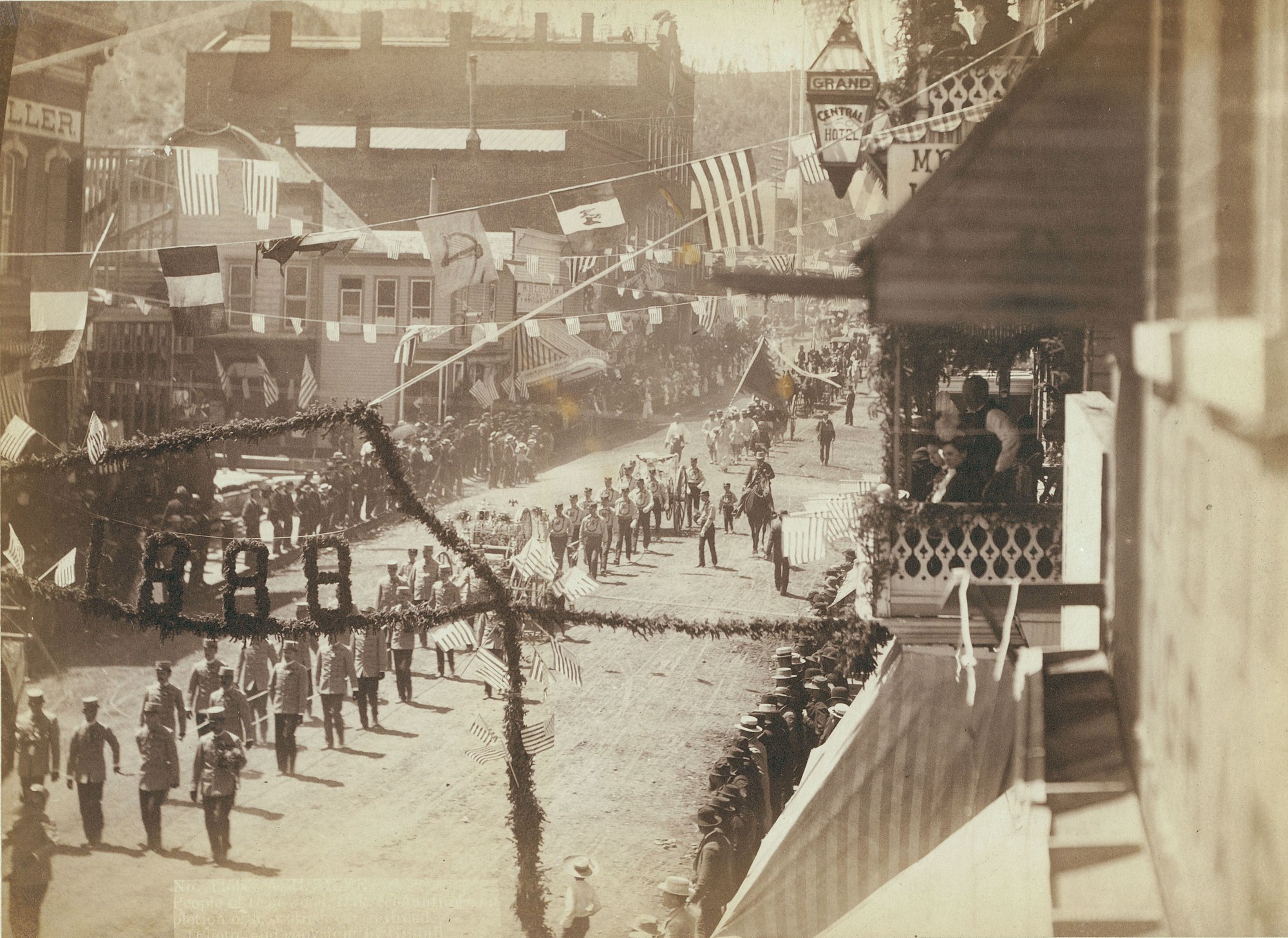
On November 2, 1889, President Benjamin Harrison signed proclamations admitting North Dakota and South Dakota into the Union. Their admission followed years of settlement, railroad expansion, and political struggle across Dakota Territory. But the territory’s growth had not produced a unified political community. Separate railroad networks and economic connections helped pull its northern and southern regions in different directions, while disputes over government deepened the divide.
The campaign for separation stretched back to 1871, when the territorial legislature petitioned Congress to create two territories. Rivalry intensified in 1883 after the territorial capital moved from Yankton to Bismarck, angering southern leaders. By the late 1880s, regional interests had converged with national partisan calculations: admitting two Republican-leaning states offered Republicans the prospect of four additional senators rather than two. Yet statehood was not simply a congressional maneuver. It also answered longstanding local demands, and the final enabling legislation won support from both Republicans and Democrats.
The admission ceremony supplied the story’s enduring twist. Unwilling to give either Dakota precedence, Harrison obscured the order in which he signed the two proclamations, leaving it unknown which state technically entered first. North Dakota consequently appears as the thirty-ninth state and South Dakota as the fortieth by alphabetical convention—not because a documented signing sequence settled their rivalry. Both celebrate November 2, 1889, as their statehood date.
