
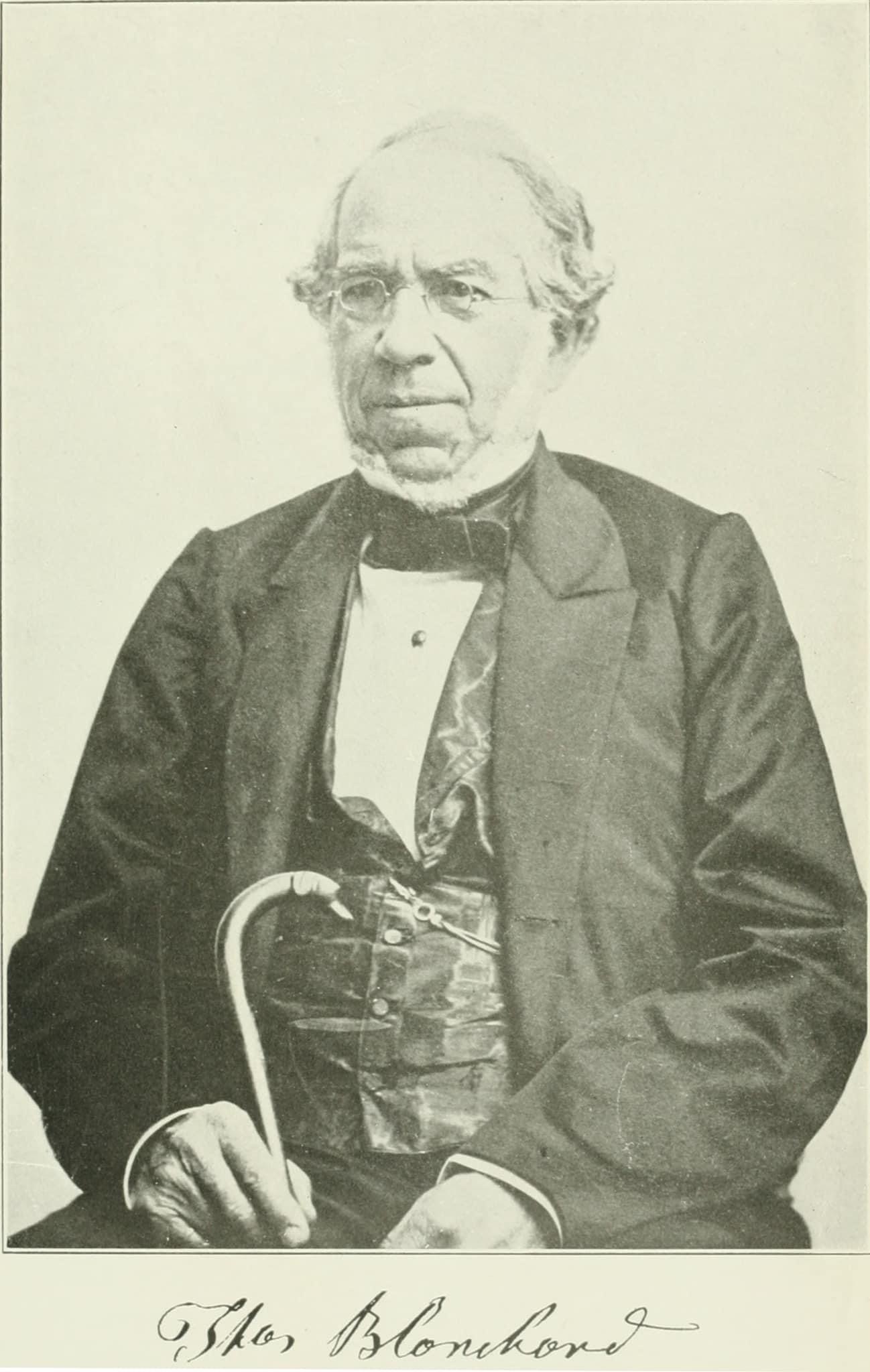
Born on June 24, 1788, in Sutton, Massachusetts, Thomas Blanchard was a mechanical prodigy whose early innovations fundamentally altered the landscape of American manufacturing. In 1806, at just eighteen years old, Blanchard conceptualized a specialized tack‑making machine capable of producing hundreds of tacks per hour—a staggering leap forward in an era when metal fasteners were still shaped individually by blacksmiths. This automated breakthrough shattered the existing industrial ceiling and drastically lowered production costs.
Blanchard’s invention did more than maximize factory output; it indirectly democratized American construction. By turning a scarce, expensive commodity into a cheap, mass‑produced staple, his machinery provided the affordable infrastructure necessary to fuel the nation’s westward expansion and rapid urbanization. This early milestone laid the groundwork for his later, world‑changing mechanical triumphs, including his famous irregular turning lathe and his pioneering 1825 steam‑powered horseless carriage.