
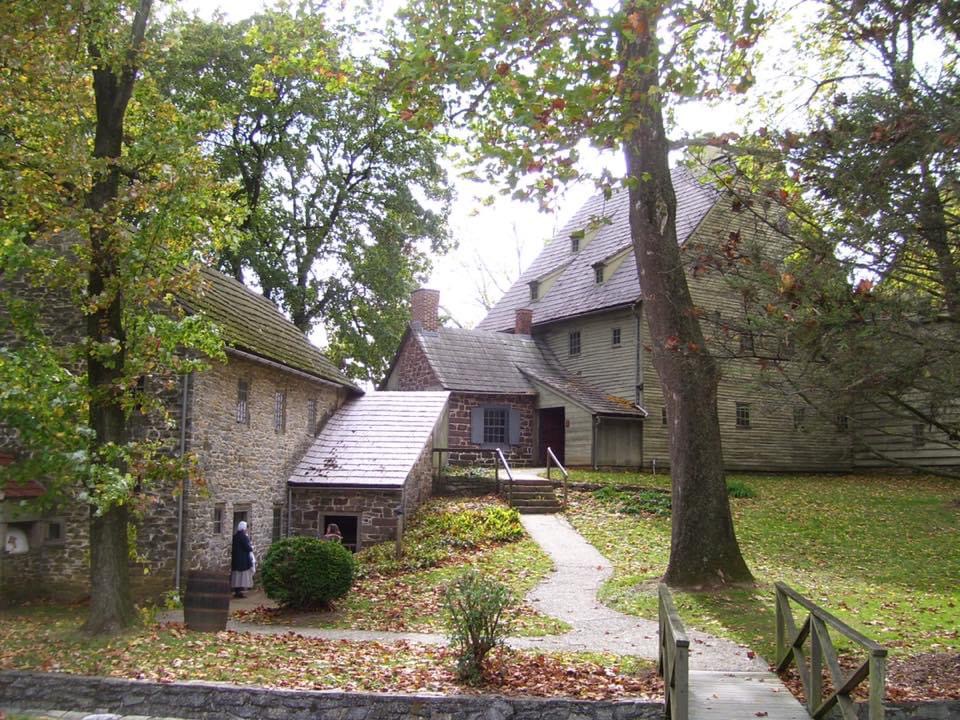
On July 6, 1768, Johann Conrad Beissel, the charismatic German mystic and religious reformer who founded the revolutionary semi-monastic community of Seventh-Day Baptists at the Ephrata Cloister in Lancaster County, Pennsylvania, passed away. Established in 1732, Beissel’s deeply pious community embraced a rigid lifestyle of asceticism, celibacy, and communal harmony, developing a highly sophisticated culture of self-sufficiency, sacred music, and advanced printing arts that made it a unique cultural anomaly in colonial America.
The profound historical intersection of this quiet religious community occurred during the height of the American Revolution following the bloody Battle of Brandywine in September 1777. Despite their strict adherence to pacifism and religious isolation, the surviving members of the Ephrata Cloister voluntarily transformed their sacred meetinghouses and bakery buildings into a massive, makeshift military hospital to nurse hundreds of wounded Continental soldiers. The selflessness of the cloister members came at a devastating internal cost, as an outbreak of typhus brought into the buildings by the sick soldiers quickly swept through the community, killing dozens of the religious celibates who gave their lives to care for the revolutionary troops.
The tragic sacrifice at Ephrata permanently bonded the isolated German religious sect to the broader narrative of American independence, transforming their sacred grounds into a historic monument of wartime compassion and civic mercy. The community’s advanced printing press was even utilized by the Continental Congress to print vital revolutionary paper currency when Philadelphia was occupied by British forces. Today, the carefully preserved wooden structures of the Ephrata Cloister stand as a unique testament to early American religious pluralism, illustrating how an isolated group of mystics stepped forward during the nation’s darkest hours to provide comfort to the republic.
Photo Source: Ephrata Cloister, Bakery and Meeting House by Joe Orbin CC-BY-SA 4.0 via Wikimedia Commons
