
On October 19, 1950, American and South Korean forces entered the North Korean capital of Pyongyang, marking a major milestone in the United Nations counteroffensive. Following General Douglas MacArthur’s amphibious landing at Inchon and the breakout from the Pusan Perimeter, UN forces had crossed the 38th parallel and advanced deep into North Korea. The capital’s fall underscored the collapse of North Korean resistance across much of the country and raised hopes of a swift UN victory.
The U.S. Army’s 1st Cavalry Division and the Republic of Korea’s 1st Infantry Division led the advance into the city. North Korean troops fought from defensive positions along the approaches, but resistance weakened as the attackers reached the capital. Fifth Air Force fighters provided crucial support to the American advance. South Korean troops occupied the government district on October 20, encountering little resistance from its demoralized defenders.
The victory, however, coincided with the emergence of a far larger threat. Chinese People’s Volunteer Army forces began crossing the Yalu River into North Korea on October 19 and launched their first offensive on October 25. As UN troops continued northward, Chinese intervention overturned expectations of an early end to the war and transformed the strategic situation.
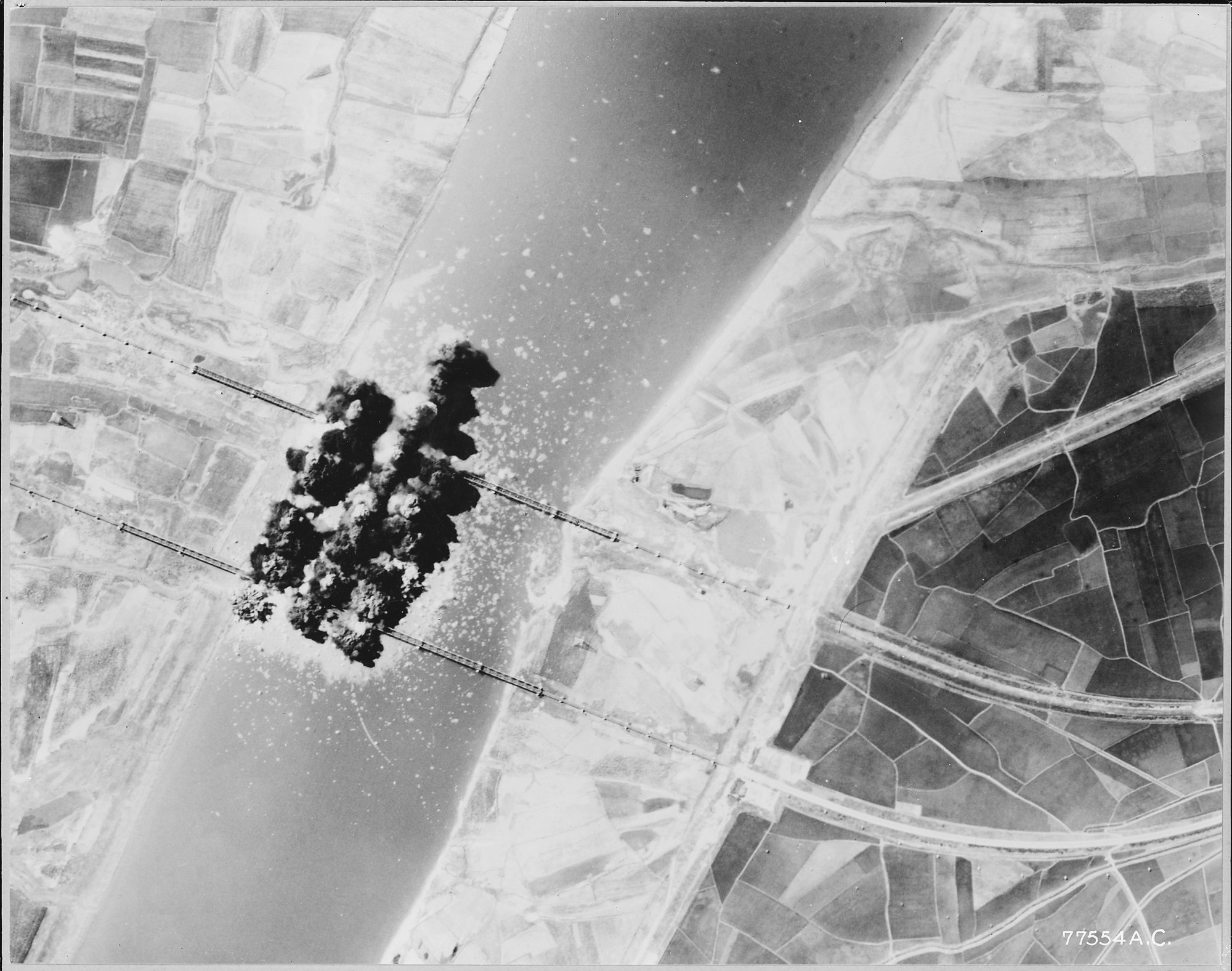
Image: A United States Air Force documentation photograph captures heavy B-29 Superfortress bombing strikes systematically targeting vital railroad bridges forty miles outside of Pyongyang in 1950. This intensive aerial interdiction campaign heavily paralyzed enemy supply lines, directly clearing the path for American and allied UN forces to successfully capture the North Korean capital on October 19, 1950.
