
On September 26, 1777, Philadelphia—the largest city in the rebelling colonies and the seat of the Continental Congress—did not fall in a blazing final battle. It was surrendered to occupation. Two weeks after defeating George Washington’s army at the Battle of Brandywine, British and Hessian troops under General William Howe entered the city unopposed. Some residents watched anxiously, Patriots fled, and Loyalists welcomed the return of British rule. Congress had already escaped west; the Liberty Bell had been moved for safekeeping; and the city that had declared independence now lay under the authority of the empire it had defied.
For the next nine months, Philadelphia became a divided and overcrowded military city. British officers held dinners, dances, theatrical performances, and lavish entertainments, while many civilians confronted requisitions, shortages, occupied homes, and the daily presence of troops. Churches and other buildings were converted to military uses, including hospitals, stables, and prisons. Suspected Patriots could face arrest, while Loyalists pinned their hopes on a lasting British victory.
Yet the capture of Philadelphia did not end the American Revolution. Congress survived in exile, Washington’s army endured the winter at Valley Forge, and Britain learned that occupying a revolutionary capital was not the same as defeating a revolution. When the British evacuated Philadelphia in June 1778, they left a city marked by nine months of wartime occupation—and an American cause still very much alive.
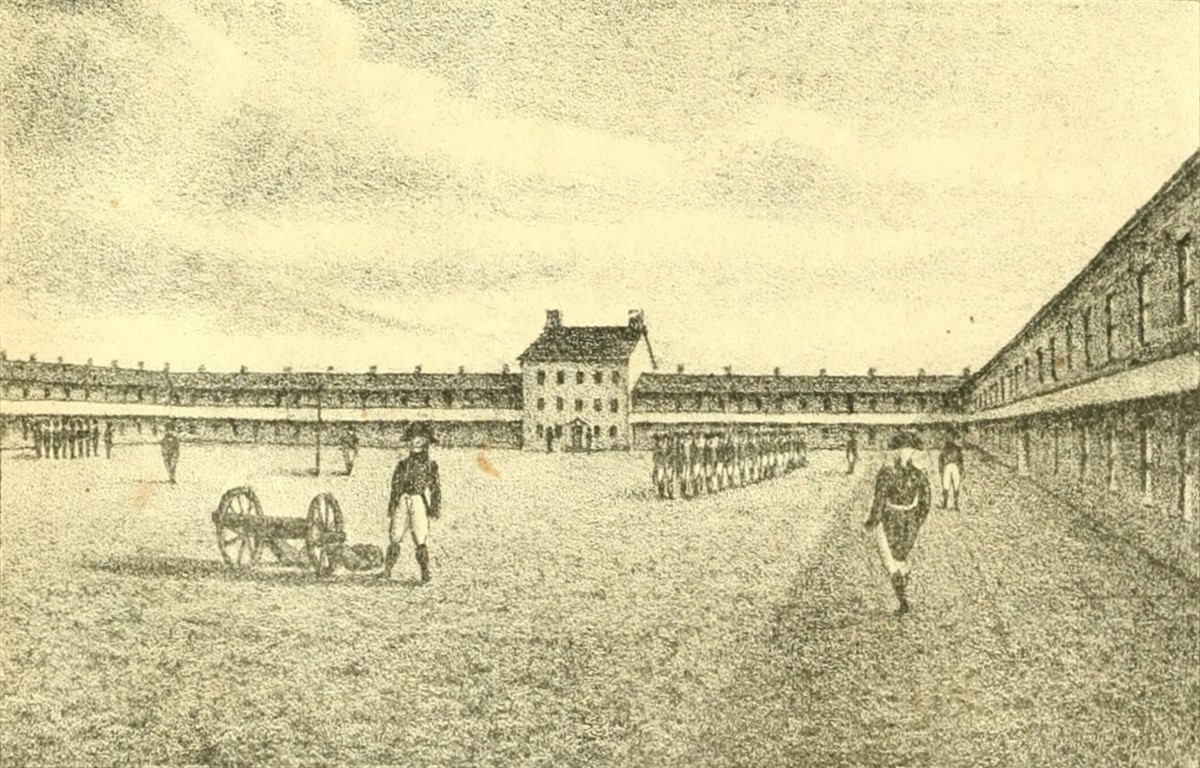
(Image: This historical line engraving depicts the Northern Liberties Barracks, a sprawling brick military complex built in 1757 to house royal troops. Located just north of the city limits between 2nd and 3rd Streets, from Green Street to St. John Street, the multi-acre site became the British Army’s primary northern headquarters and fortified checkpoint gateway during the 1777–1778 military occupation of the revolutionary capital.)
