
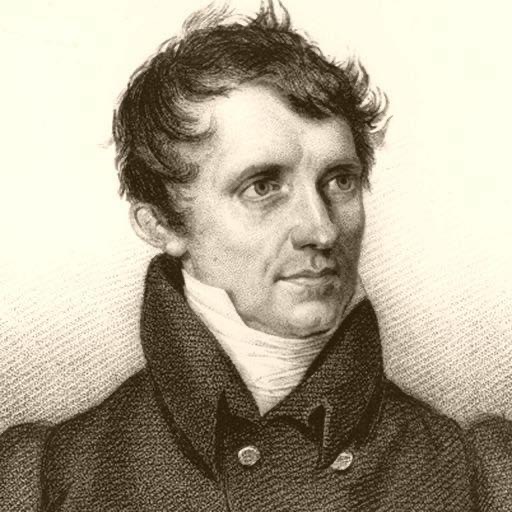
On September 15, 1789, James Fenimore Cooper—one of the first major American novelists—was born in Burlington, New Jersey. Shortly afterward, his family moved to Cooperstown, New York, the frontier settlement founded by his father, William Cooper. The forests, lakes, and unsettled landscapes of upstate New York would leave a lasting mark on Cooper’s imagination and fiction.
Cooper earned enduring renown through the Leatherstocking Tales, five frontier novels centered on the scout Natty Bumppo, also known as Hawkeye. The best known of these, The Last of the Mohicans (1826), is set during the French and Indian War and remains one of the defining works of early American historical fiction.
Through adventure, landscape, and historical conflict, Cooper helped establish the American frontier as a major subject for literature. His novels combined romantic visions of wilderness with reflections on colonial violence, cultural encounter, and a rapidly changing North American world. His influence helped lay the groundwork for a distinct national literary tradition.
As Cooper wrote in The Last of the Mohicans, “It is better for a man to die at peace with himself than to live haunted by an evil conscience.”
Image: Engraving of James Fenimore Cooper, via Wikimedia Commons, public domain.
