
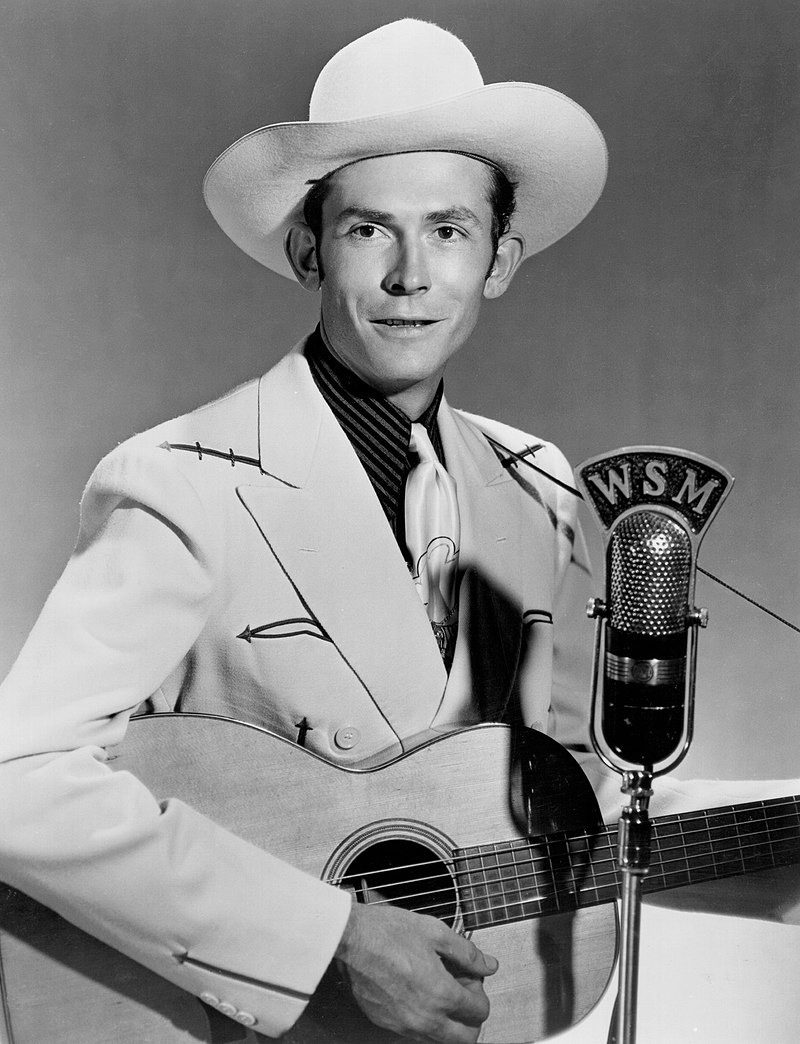
On September 17, 1923, Hiram “Hank” Williams was born in Mount Olive, Butler County, Alabama. Often regarded as country music’s first superstar, Williams would create a body of work that helped define modern country songwriting and continues to influence musicians across country, folk, rock, and popular music.
Williams grew up during the Great Depression, spending much of his childhood with his mother in difficult financial circumstances. He was born with spina bifida occulta, a congenital spinal condition associated with chronic back pain that affected him throughout his life. As a young musician, he learned guitar and absorbed blues influences from Rufus “Tee-Tot” Payne, an African American street performer whom Williams later described as his only musical teacher.
In a recording career cut short by his death at age 29 on January 1, 1953, Williams wrote and recorded enduring classics including “Your Cheatin’ Heart,” “Hey, Good Lookin’,” “Jambalaya (On the Bayou),” and “I’m So Lonesome I Could Cry.” His songs paired direct, economical language with profound emotional insight, giving voice to heartbreak, loneliness, longing, faith, and everyday hardship.
Williams’s high, plaintive vocal style and honky-tonk sound helped bring country music to a much broader American audience. His work set lasting standards for the genre’s songwriting and performance, and his influence can be heard in generations of artists who followed.
His legacy also continued through his son, Hank Williams Jr., who became a major country performer in his own right. Though Hank Williams’s life was brief and often troubled, his recordings remain central to American roots music and to the history of country music.
Image via Wikimedia Commons, public domain
