
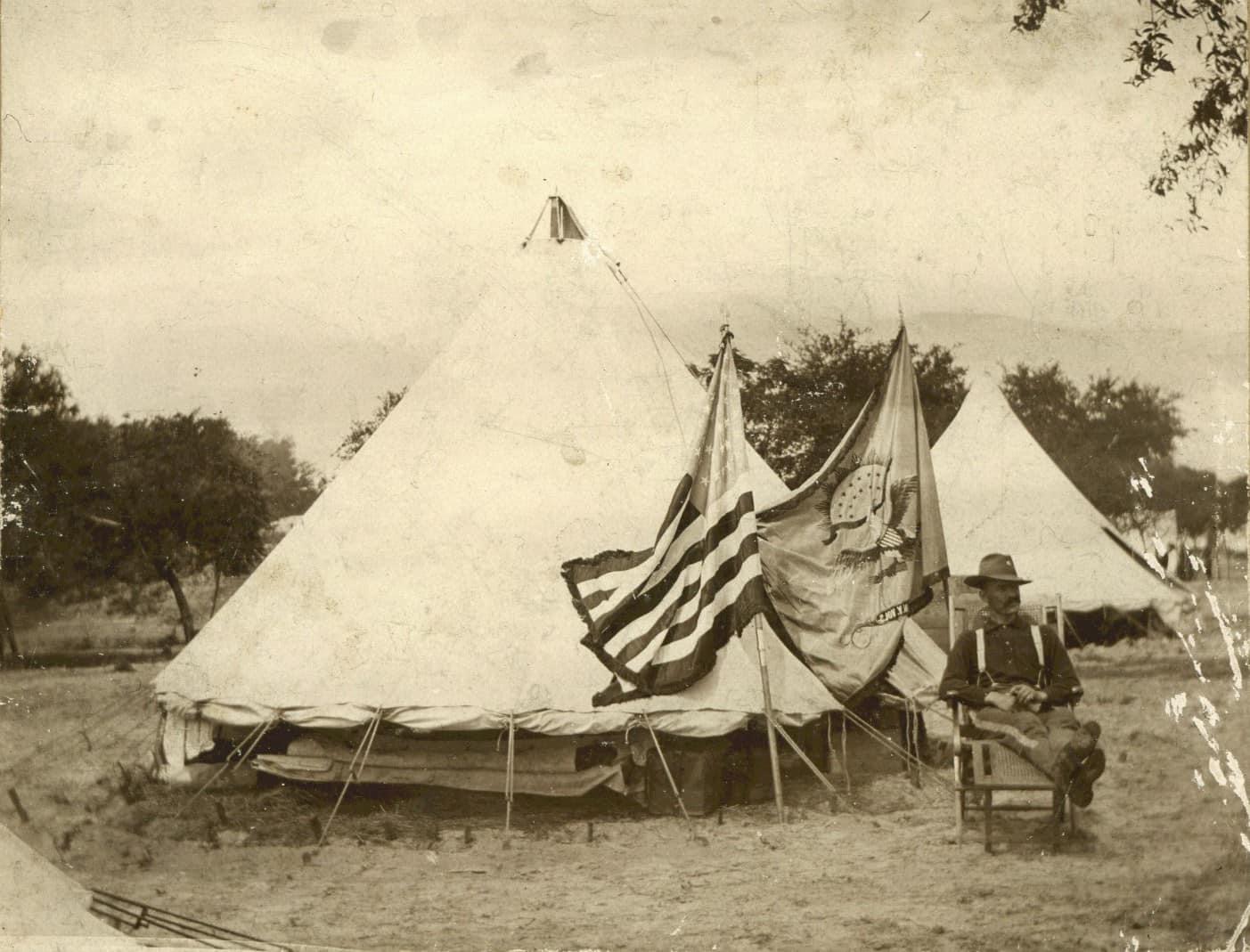
On June 10, 1898, U.S. Marines stormed ashore at Guantánamo Bay, launching the first major American land operation in Cuba during the Spanish‑American War. Under the protection of naval gunfire, they established Camp McCalla and secured a deep‑water harbor essential for sheltering the U.S. fleet from storms and enemy attack. The landing marked a decisive step in America’s effort to dislodge Spanish power from the Caribbean.
Amid dense jungle and hidden Spanish riflemen, Marine private John Quick performed an act of extraordinary composure. Standing fully exposed on a hilltop, he used signal flags to relay targeting coordinates to offshore warships, enabling accurate fire that broke the Spanish resistance. His courage helped stabilize the beachhead and earned him the Medal of Honor, anchoring the U.S. military presence that would shape the region for generations.
