
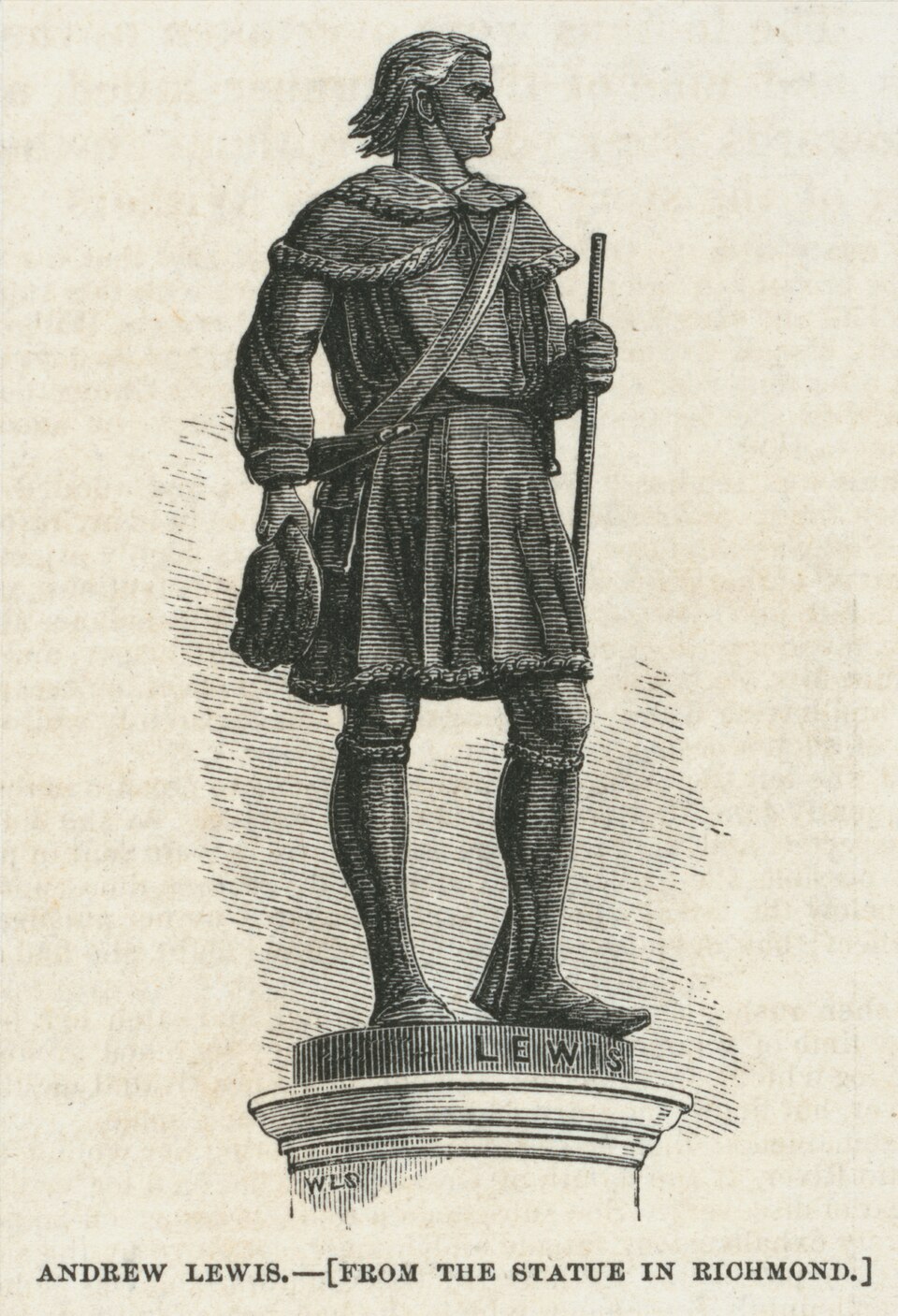
On October 10, 1774, Virginia militiamen commanded by Colonel Andrew Lewis fought a major battle against Shawnee, Mingo, and allied Indigenous warriors led by the Shawnee leader Cornstalk near the confluence of the Ohio and Great Kanawha rivers, in present-day West Virginia. The engagement was the principal battle of Lord Dunmore’s War, a conflict rooted in escalating violence over the Ohio Valley, where Virginia settlers and land speculators pressed into territory long used and claimed by Native peoples.
Lewis had led a force of roughly 1,000 militiamen westward to join Virginia’s royal governor, Lord Dunmore, in an intended campaign against the Shawnee towns in the Ohio country. Before that junction could occur, Cornstalk attacked Lewis’s camp at Point Pleasant. The fighting began early in the morning and continued for much of the day. The wooded terrain and determined resistance on both sides produced a costly, close-range battle. Virginia’s troops ultimately held their position, while Cornstalk withdrew his warriors across the Ohio River and back toward the Scioto Valley.
The battle helped compel negotiations between Lord Dunmore and Shawnee leaders at Camp Charlotte later that month. Under the resulting agreement, the Shawnee accepted the Ohio River as a boundary and agreed to halt attacks on settlers and travelers south of it. In practical terms, the settlement strengthened Virginia’s claim to Kentucky and encouraged further white migration and land speculation west of the Appalachian Mountains. It did not, however, settle the deeper conflict over Native sovereignty or land; Indigenous resistance to American expansion would continue for decades.
Point Pleasant therefore mattered beyond its immediate military result. The campaign brought a temporary measure of security to Virginia’s western frontier just before the outbreak of the American Revolution, reducing the prospect that Virginia would face major fighting simultaneously against Britain and Native nations in the Ohio Valley. Later generations sometimes promoted the battle as the “first battle of the American Revolution,” but historians generally place it within Lord Dunmore’s War—a distinct frontier conflict that nevertheless shaped the political and military circumstances of the revolutionary era.
