
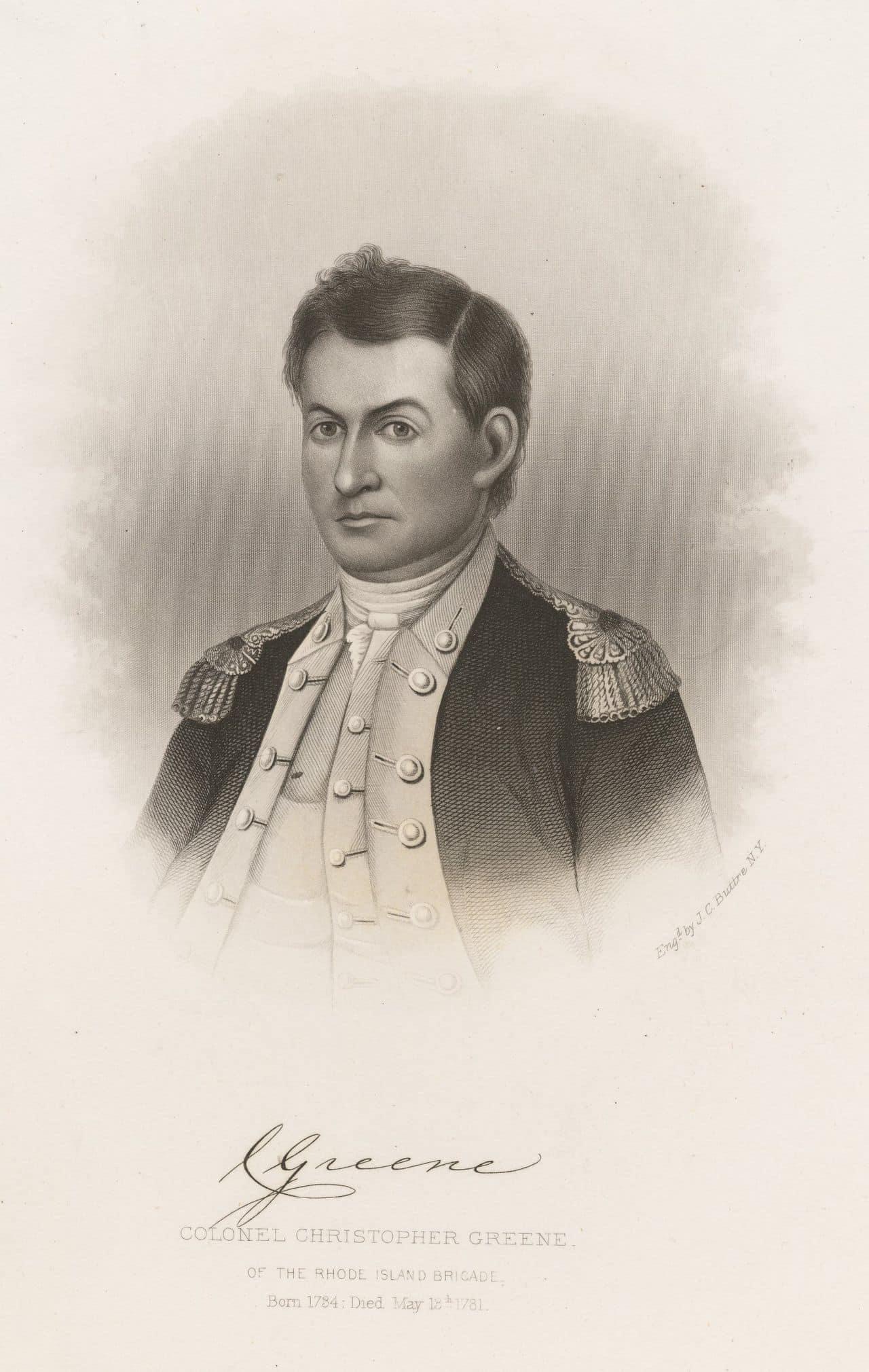
On October 22, 1777, several hundred Rhode Island Continentals under Colonel Christopher Greene successfully defended Fort Mercer, New Jersey, against an assault by approximately 1,200 Hessian troops. Positioned at Red Bank along the Delaware River, the earthen fort formed part of an American defensive system intended to prevent British ships from carrying supplies to occupied Philadelphia. Together with Fort Mifflin and American naval forces, it helped keep this vital supply route closed.
Led by Colonel Count Carl von Donop, the Hessians attacked late in the afternoon. Some entered an abandoned section of the fort, only to encounter obstacles separating them from the defended works. Unable to clear those barriers effectively, the attackers came under American fire, while gunboats on the Delaware added their support. The assault collapsed, leaving more than 300 Hessians killed, wounded, or captured. Donop was mortally wounded; American losses were reported as 14 killed and 23 wounded.
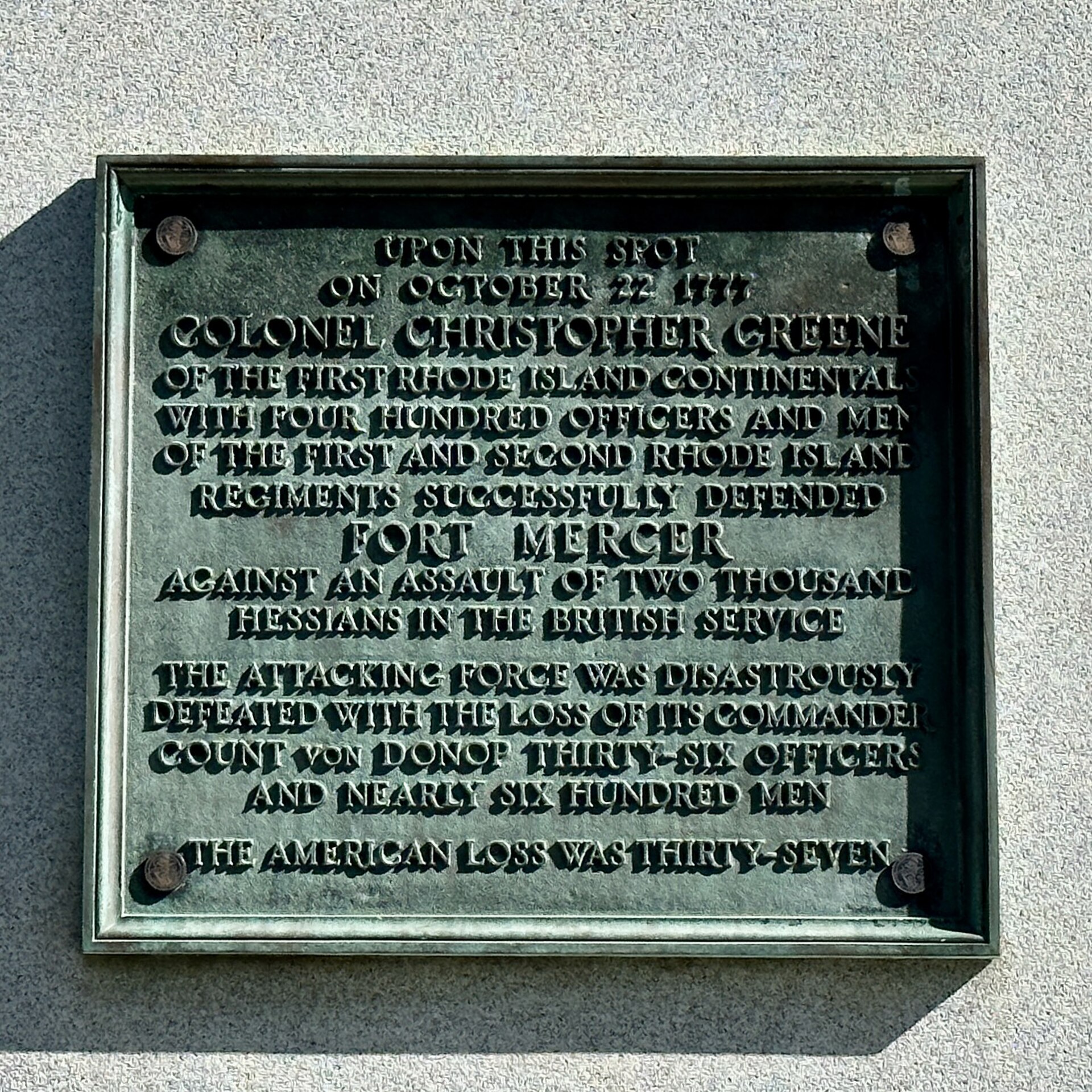
The victory at Red Bank demonstrated how effective fortifications, disciplined defenders, and supporting naval fire could defeat a larger attacking force. It did not secure the Delaware indefinitely: Fort Mercer remained in American hands for only a few more weeks. Nevertheless, Greene and his men had inflicted a costly defeat and prolonged the effort to deny the British an essential supply route to Philadelphia.
