
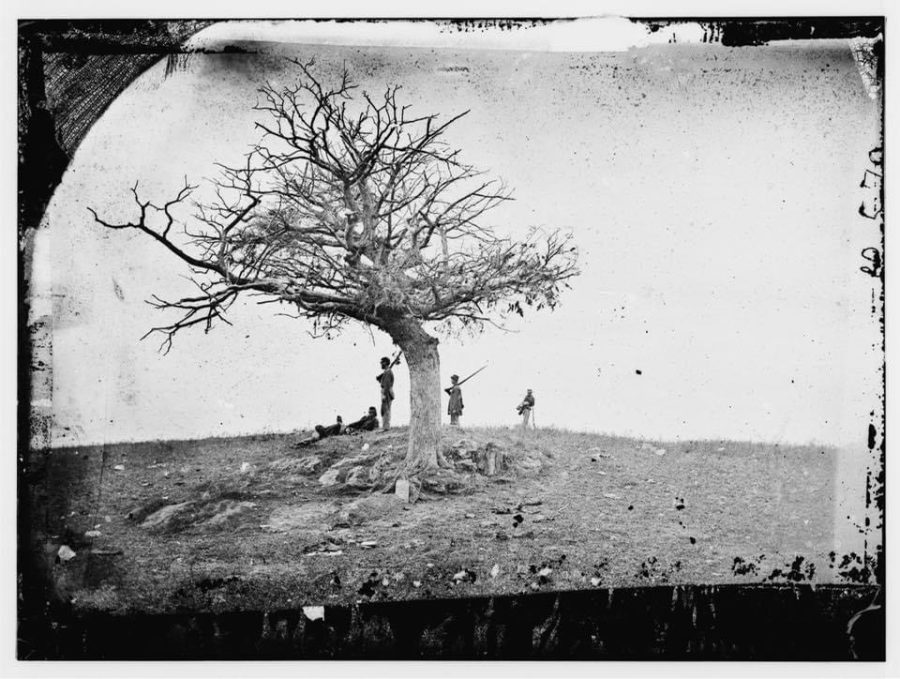
On September 17, 1862, Union and Confederate armies fought along Antietam Creek near Sharpsburg, Maryland, in the Battle of Antietam. After a tense night of preparation, Maj. Gen. George B. McClellan’s Army of the Potomac attacked Gen. Robert E. Lee’s Army of Northern Virginia, which had crossed into Maryland during the Confederacy’s first major invasion of the North.
The fighting lasted roughly twelve hours and unfolded across farmland that would become inseparable from the history of the Civil War: the Cornfield and West Woods in the morning, the Sunken Road at midday, and Burnside’s Bridge in the afternoon. Soldiers fought at close range amid repeated attacks and counterattacks. By nightfall, more than 23,000 men had been killed, wounded, or reported missing, making Antietam the bloodiest single day of combat in American history.
Neither army destroyed the other, and the battle is often described as tactically inconclusive. Yet Lee’s subsequent withdrawal across the Potomac River ended his Maryland campaign and allowed the Union to claim a strategic victory. Five days later, on September 22, President Abraham Lincoln issued the preliminary Emancipation Proclamation, declaring that enslaved people in areas still in rebellion against the United States would be freed on January 1, 1863. The proclamation transformed the war’s purpose: preserving the Union became inseparable from destroying slavery.
Today, Antietam National Battlefield commemorates not only the battle’s military importance but also the immense personal loss it inflicted on soldiers, families, and communities across a divided nation. Its fields, roads, and grave sites remain enduring reminders of the violence of civil war and of the profound national changes that followed.
Image: “A lone grave on battle-field of Antietam.” Alexander Gardner made it in September 1862; it shows five soldiers gathered near the grave of Pvt. John Marshall of Company L, 28th Pennsylvania Volunteers. Via Wikimedia Commons, public domain/no known restrictions on publication.
