
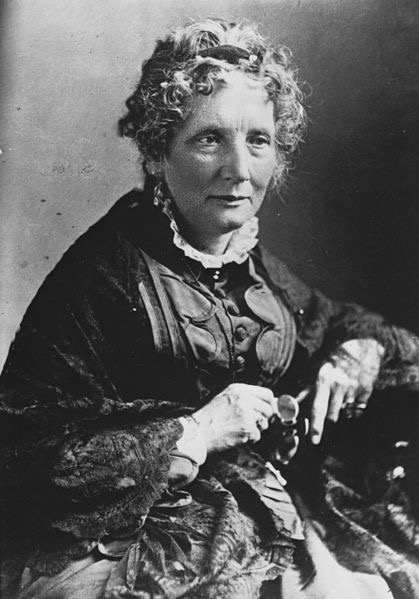
Born on June 14, 1811, Harriet Beecher Stowe became a literary force who proved that words could alter the course of American history. Stowe authored 30 books over her lifetime, but her 1852 masterpiece, Uncle Tom’s Cabin, struck like a lightning bolt, exposing the stark moral horrors of slavery to the global public.
The real-world impact of her book was so immense that it became the second best-selling book of the entire 19th century, surpassed only by the Bible. Its publication provoked such deep outrage in the American South that several states explicitly banned the novel, and Stowe received numerous anonymous threats and hostile letters—a grim testament to how deeply her writing had unnerved the defenders of slavery and a reflection of the unverified legends of violence that would later circulate about her mail. Though popular myth claims Abraham Lincoln later greeted her as the woman who started the Civil War, the real history is richer: she met the president in 1862 as a fierce champion of freedom. Her brilliant prose had already permanently shattered the nation’s political complacency, forcing a moral reckoning that could no longer be ignored.
