
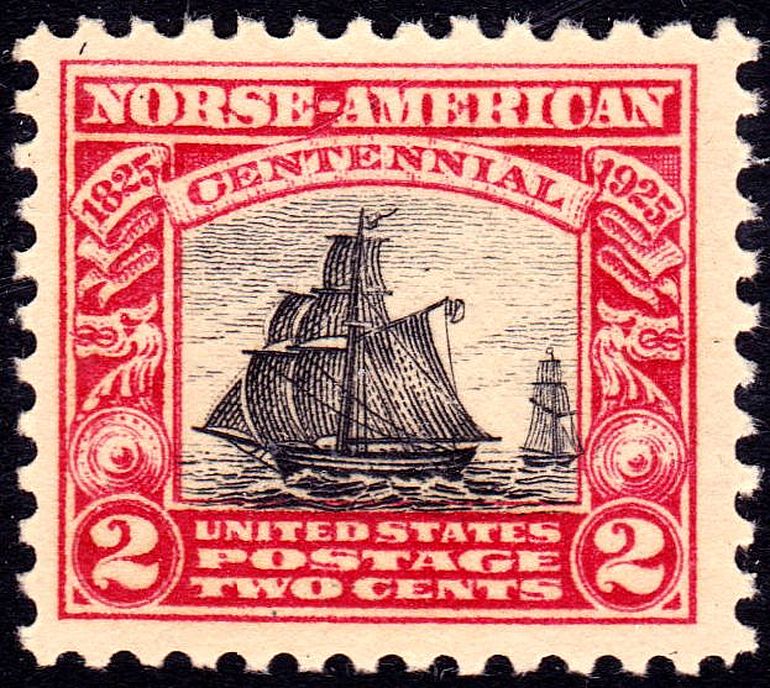
On October 9, 1825, the Norwegian sloop Restauration arrived in New York Harbor after a grueling three-month transatlantic voyage from Stavanger, Norway. The vessel had departed with 52 Norwegian emigrants—many of them Quakers and other religious dissenters—and arrived with 53 people aboard after the birth of a child during the crossing. Its arrival is widely regarded as the beginning of organized, direct Norwegian emigration to the United States. The travelers sought religious liberty and, for many, the prospect of greater economic opportunity. Their voyage came at a time when religious nonconformists in Norway, including Quakers and followers of the lay preacher Hans Nielsen Hauge, faced restrictions under the state church. Although the Restauration safely reached America, its owners soon encountered another obstacle: U.S. authorities seized and fined the small sloop because it was considered overcrowded under maritime regulations.
The passengers, later remembered as the “Sloopers,” established an early Norwegian settlement at Kendall in Orleans County, New York. Their crossing became an important precedent for later emigrants and helped set in motion the broader Norwegian migration that would reshape communities across the American Midwest, particularly in Illinois, Wisconsin, Minnesota, Iowa, and the Dakotas.
The landing of the Restauration remains a foundational event in Norwegian-American history. The resolve of its passengers—who crossed the Atlantic in a 54-foot sloop in search of freedom and opportunity—became a lasting symbol of the rural immigrant experience. Their arrival forged an enduring connection between Norway and the United States and helped lay the foundations of Norwegian-American communities that continue to shape the cultural life of the Upper Midwest.
