
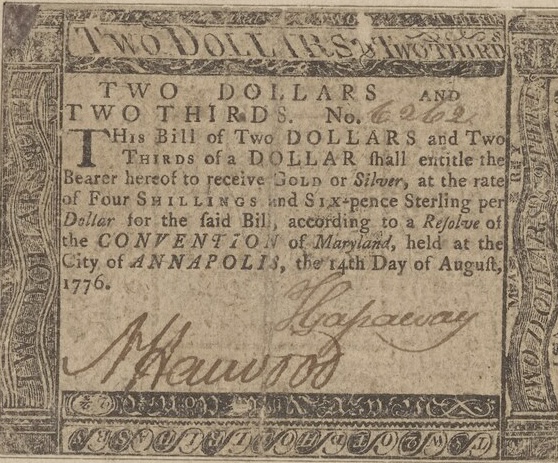
A Maryland Colonial currency note valued at “Two Dollars and Two-Thirds of a Dollar” that was printed according to a Resolve of the Annapolis Convention that took place on August 14, 1776.
The issuance of this specialized “Two Dollars and Two-Thirds” note on August 14th was a bold, treasonous act of financial rebellion that occurred just days after the public reading of the Declaration of Independence in Maryland. Recognizing that the revolutionary war could not be sustained without an independent monetary system, the radical Annapolis Convention bypassed the British Crown entirely to authorize a massive printing of localized paper money to finance the purchase of gunpowder, muskets, and provisions for the state’s flying camp regiments. Signed by hand and decorated with intricate anti-counterfeiting leaf patterns designed by early printers, this fragile slip of paper served as a high-stakes economic gamble, proving that the newborn state was actively building the sovereign institutional infrastructure required to sever its ties with the British Empire forever.
via NYPL, no known restrictions
