
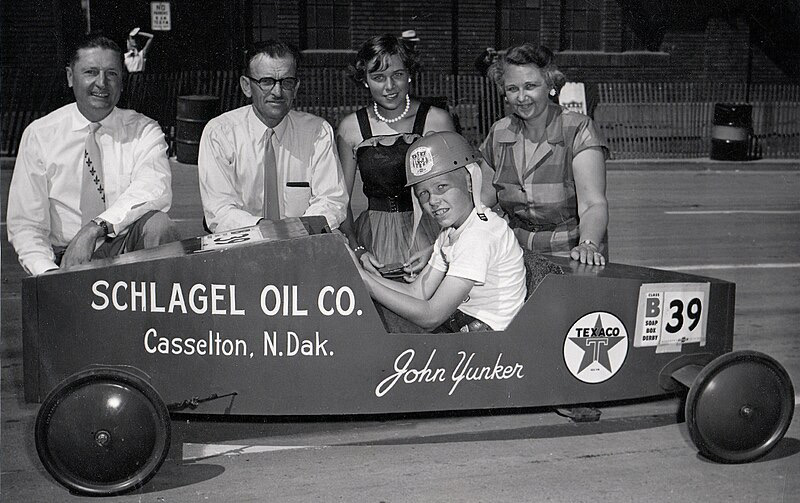
August 19, 1934 saw the first All-American Soap Box Derby race, ran in Dayton, Ohio. The next year the Soap Box Derby move to Akron and has taken place every year since except for four years during WW2 and one year due to Covid-19. Racers are typically sponsored, as was North Dakota’s John Yunker in 1953.
The inaugural championship race on August 19th was a brilliant, grassroots cultural milestone that captured the imagination of a nation navigating the dark, desperate depths of the Great Depression. Organized by innovative journalist Myron Scott after he witnessed local children racing homemade wooden crates down a hill, the event transformed a simple neighborhood leisure pastime into a highly structured, national athletic competition. The first official race in Dayton brought together over 300 young drivers from across the country, who steered their gravity-powered, hand-crafted vehicles in front of a packed crowd of over 40,000 cheering spectators.
The enduring magic of the Soap Box Derby rests on its strict, democratic requirement for self-reliance and manual craftsmanship. Every car had to be built entirely by the hands of the young racers themselves, who spent months recycling wooden soap crates, old baby carriage wheels, and scrap tin to build sleek, aerodynamic racers on tight family budgets. This focus on practical engineering and determination turned the race into an essential civic institution, inspiring generations of children to find confidence through physical innovation and community sportsmanship.
Image: Young John Yunker sits proudly inside his sponsored, hand-crafted North Dakota gravity racer during the 1953 national derby via Chris Yunker, CCA 2.0 Generic via Wikimedia Commons.
