
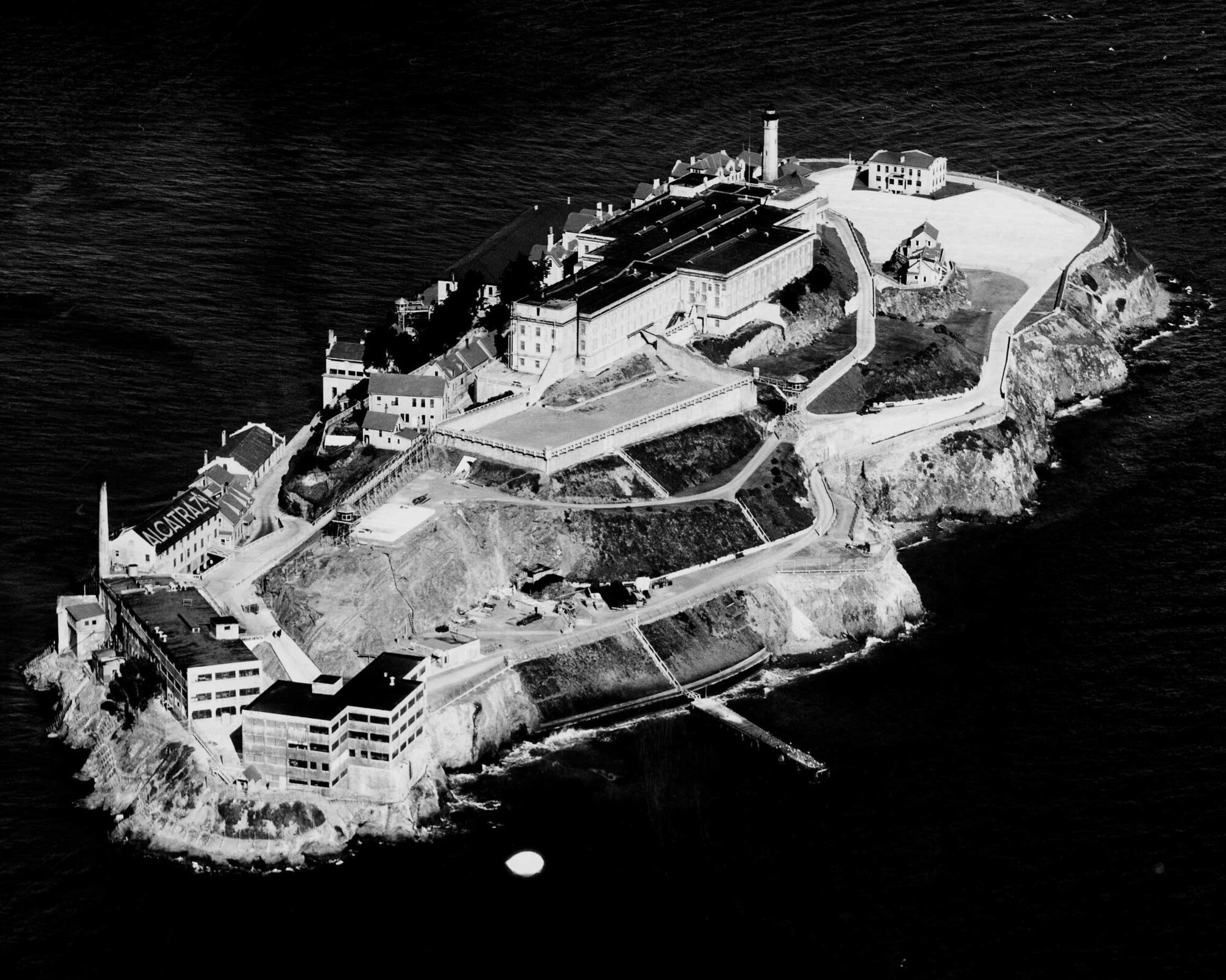
A striking historical photograph captured on July 6, 1934, depicts a panoramic view of Alcatraz Island rising from the cold, fast-moving waters of San Francisco Bay. Taken just one month before the island was formally redesignated as a federal maximum‑security penitentiary, the image shows the fortress during its final weeks under U.S. Army jurisdiction, as federal officials prepared to transform the site into the nation’s most formidable civilian prison.
The urgency behind Alcatraz’s transition stemmed from the violent surge of organized crime and “public enemy” gangsters during Prohibition and the Great Depression. The Federal Bureau of Prisons selected Alcatraz precisely because its geography offered an unparalleled natural barrier: freezing water, brutal currents, and sheer isolation. The island was engineered to hold high‑profile, unmanageable inmates who had corrupted or overwhelmed state prisons, ensuring that escape was not merely unlikely but physically impossible.
When the federal penitentiary opened in August 1934, Alcatraz quickly became a symbol of the government’s determination to reassert control over the era’s lawlessness. It housed notorious figures such as Al Capone, Machine Gun Kelly, and later Whitey Bulger, cementing its reputation as the ultimate destination for America’s most dangerous criminals. Over time, the island’s mythology — part military history, part penal innovation, part cultural folklore — transformed it into one of the nation’s most iconic historic sites. Today, Alcatraz stands as a premier national park, drawing millions of visitors who come to explore its layered past and its enduring place in American memory.
Image via Wikimedia Commons, public domain
