
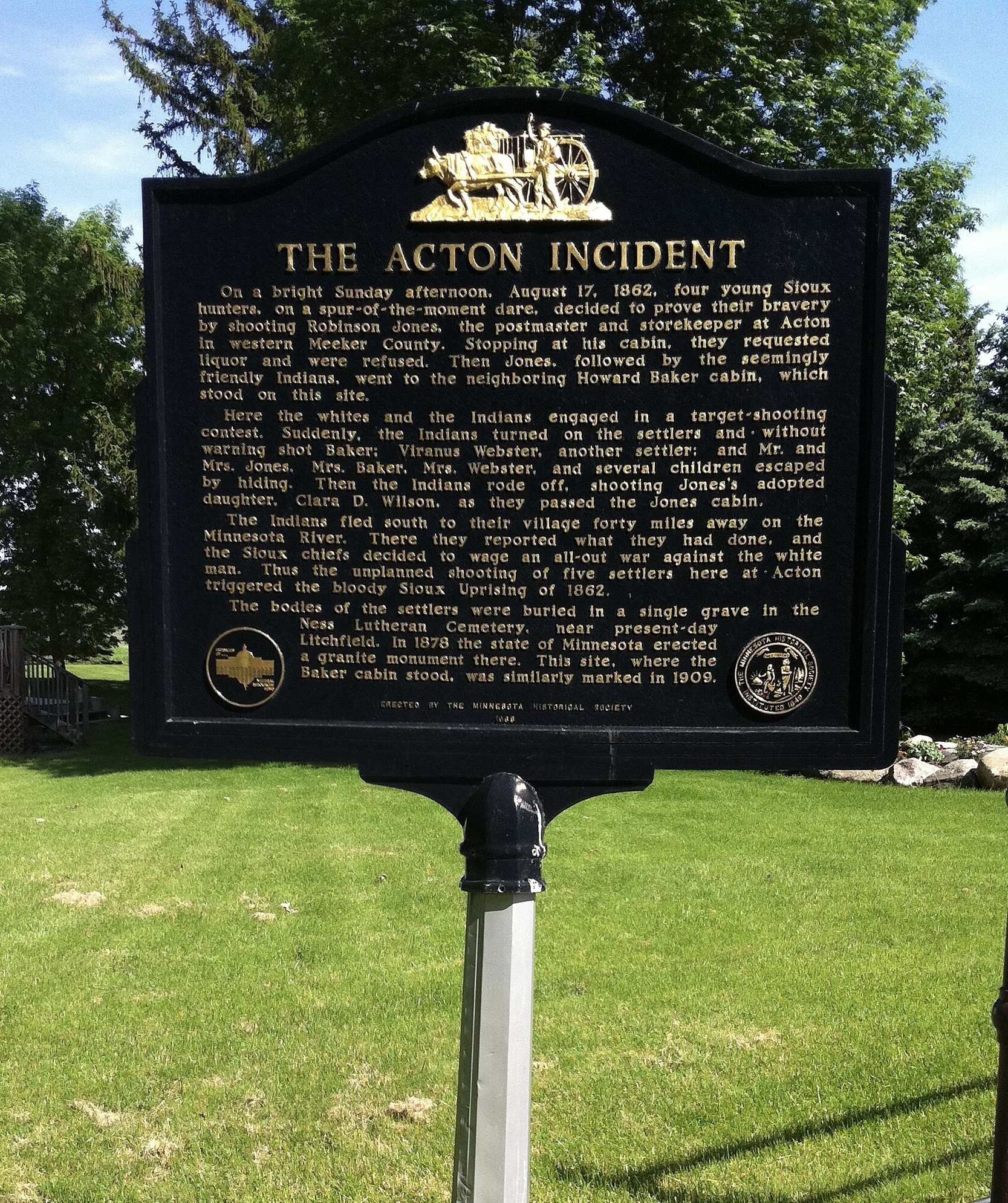
.On August 17, 1862, in a clearing near Acton, Minnesota, five settlers lay dead — shot by four young Wahpeton Dakota men after a tense confrontation. Some accounts describe the moment as erupting from a dare involving stolen eggs, a detail preserved in survivor testimony and Dakota oral history, though not universally accepted by all historians.
What is indisputable is the deeper context: years of broken treaties, withheld annuities, and the slow starvation of Dakota communities forced onto shrinking lands. The killings were not random; they were the rupture point in a long‑building crisis. Within hours, Dakota leaders debated war. By dawn, Little Crow agreed to lead his people into battle.
The six‑week conflict that followed claimed hundreds of lives and ended with mass executions, forced exile, and the near‑erasure of Dakota presence in Minnesota. The August 17th incident stands as a tragic flashpoint — a moment when systemic failure, bureaucratic neglect, and human desperation ignited a frontier into catastrophic civil war.
Image: Acton Incident Marker from Myotus via Wikimedia Commons, CC BY 4.0
