
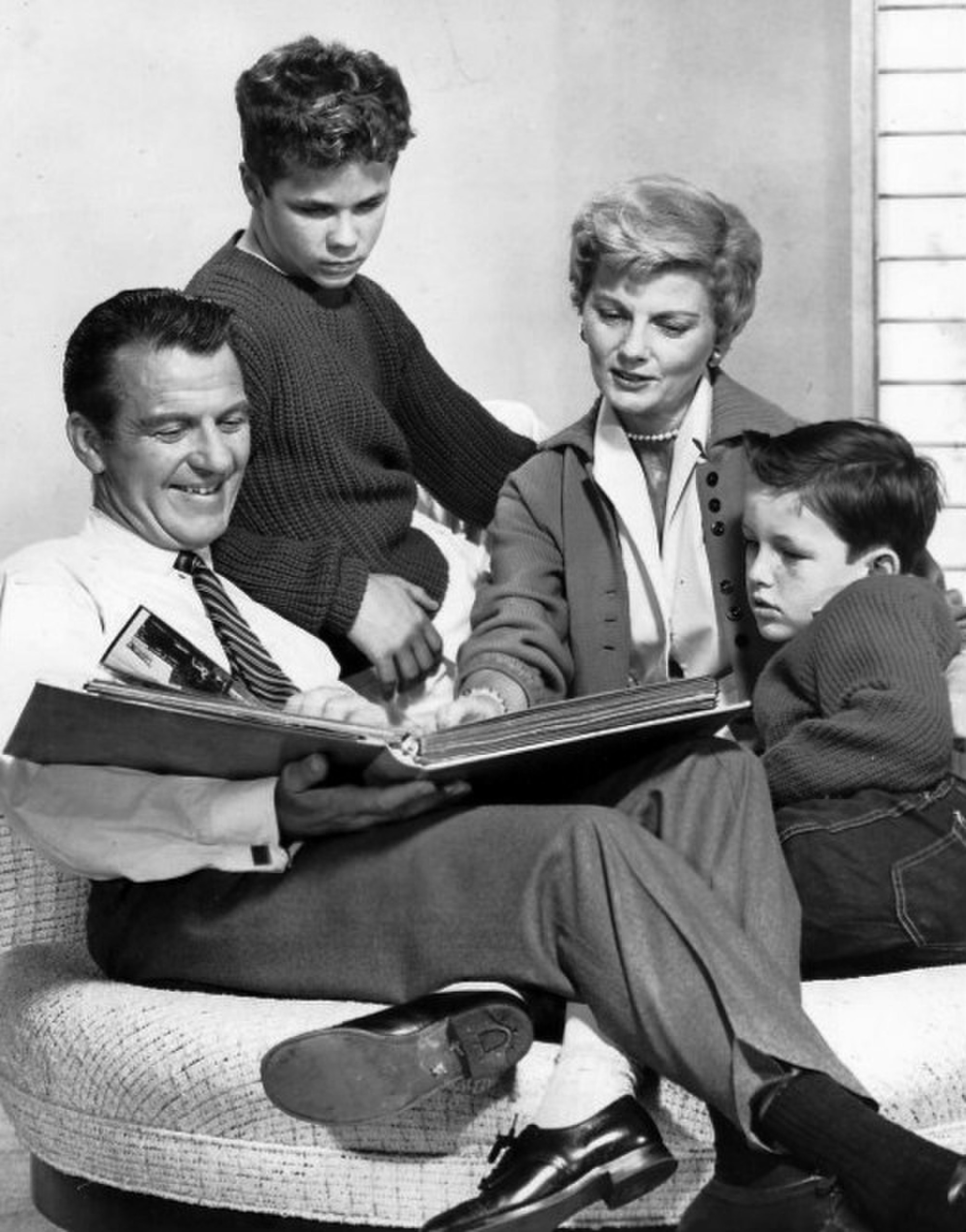
American television comedy entered a defining—and highly idealized—era on October 4, 1957, when Leave It to Beaver premiered on CBS. Created by the writing team of Joe Connelly and Bob Mosher, the family sitcom helped popularize a child-centered approach to domestic comedy, following the everyday misadventures of Theodore “Beaver” Cleaver rather than treating children merely as supporting players in their parents’ stories.
The series starred Jerry Mathers as Beaver, Tony Dow as his older brother Wally, Barbara Billingsley as the quintessential suburban mother June Cleaver, and Hugh Beaumont as their measured, guidance-minded father, Ward. Beaumont was also an ordained Methodist minister, a notable overlap between his private life and the calm moral authority he brought to Ward—a father figure who became synonymous with mid-century television domesticity.
Later critics would re-examine the series for its carefully manicured and racially homogeneous vision of postwar American suburbia. Yet its gentle humor, memorable family dynamics, and recognizable childhood dilemmas secured Leave It to Beaver a lasting place in American popular culture. Its October 4 debut began a television legacy that would continue for decades, helping solidify the family-sitcom model that influenced generations of later programs.
Image credit: Promotional portrait of the main cast of Leave It to Beaver via Wikimedia Commons, public domain.
