
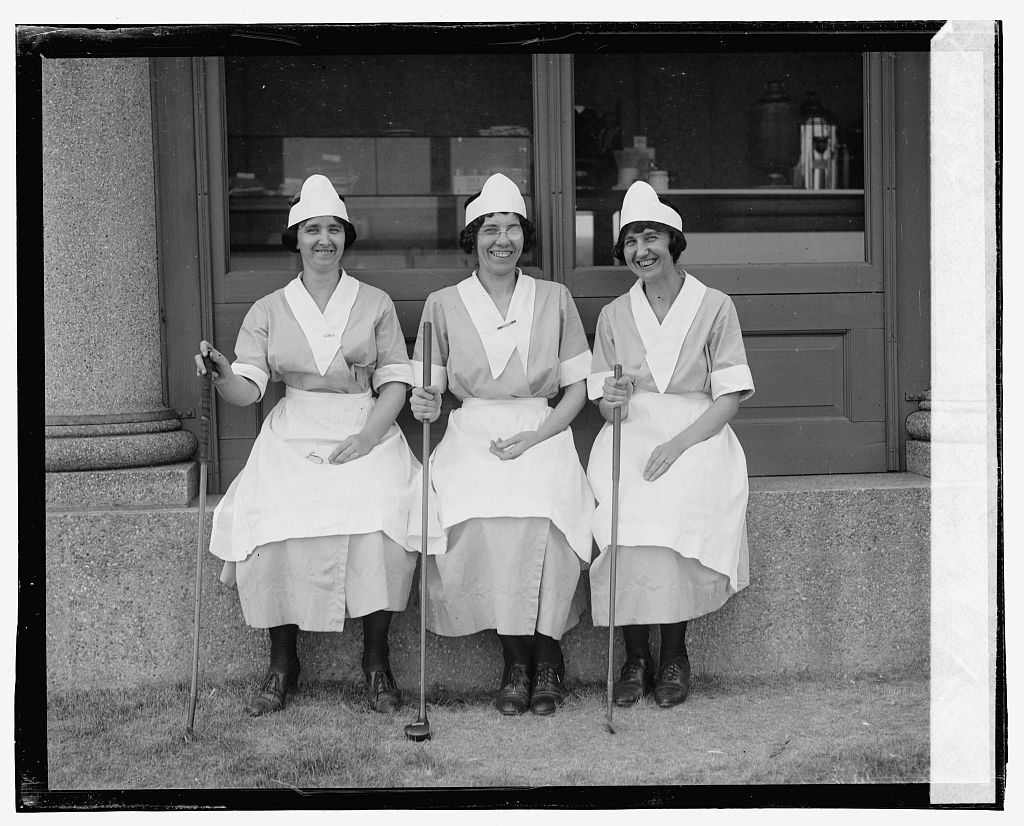
Three women in matching work uniforms knelt on the grass at East Potomac Park in Washington, D.C., on June 29, 1923, posing with golf clubs for a glass negative now preserved by the Library of Congress. Although the Second Annual American Public Links Championship held that week was a men’s amateur tournament, women played essential supporting roles on public courses during this era — staffing rental counters, assisting players, managing equipment, and helping maintain the welcoming atmosphere that defined the public‑links movement.
Their presence on the fairways reflects the early democratization of American recreation. Public courses like East Potomac Park opened golf to clerks, laborers, veterans, and government workers who had never set foot on a private club. Long before women competed in national championships, they were already helping build the infrastructure of public leisure, ensuring that newcomers felt comfortable stepping onto the green. Their quiet work on this summer morning helped transform golf from an elite pastime into a shared civic experience.
