
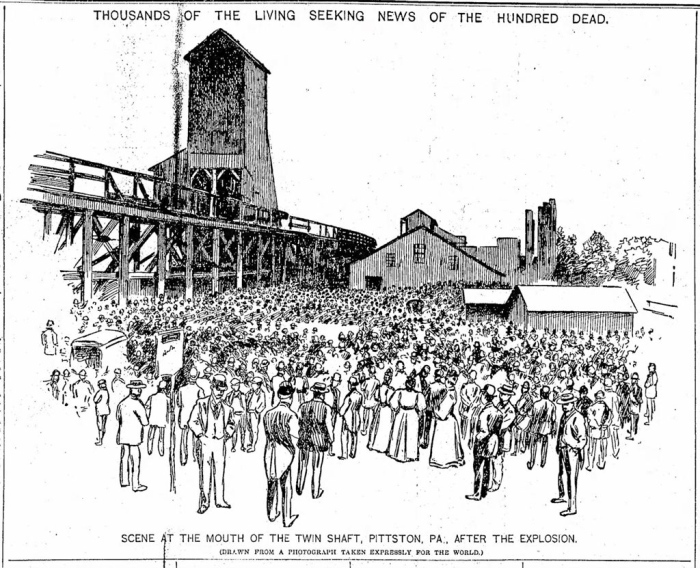
At the Newton Coal Company’s Twin Shaft colliery in Pittston, Pennsylvania, a sudden and catastrophic shift in the earth triggered an immense underground cave‑in on June 28, 1896. Millions of tons of rock and coal collapsed in an instant, sealing off the deep gangways and trapping dozens of miners hundreds of feet below the surface. Investigators later found that the company had dangerously cut away the coal pillars meant to support the roof, weakening the mine in a reckless pursuit of profit.
The true heartache of the Twin Shaft disaster unfolded in the agonizing weeks that followed. Despite frantic, around‑the‑clock rescue attempts—many led by grieving family members and fellow miners—the unstable ground made it impossible to reach the trapped men. In the end, fifty‑eight miners were officially declared dead, their bodies permanently entombed in the dark earth. The collapse left behind dozens of widows, fatherless children, and a community shattered by preventable loss.
Yet from this devastation came a turning point. The Twin Shaft disaster became a rallying cry for the early American labor movement, fueling demands for stronger safety standards and accountability in the mining industry. The forgotten lives of those fifty‑eight men became the foundation for reforms that protected generations of miners to come
