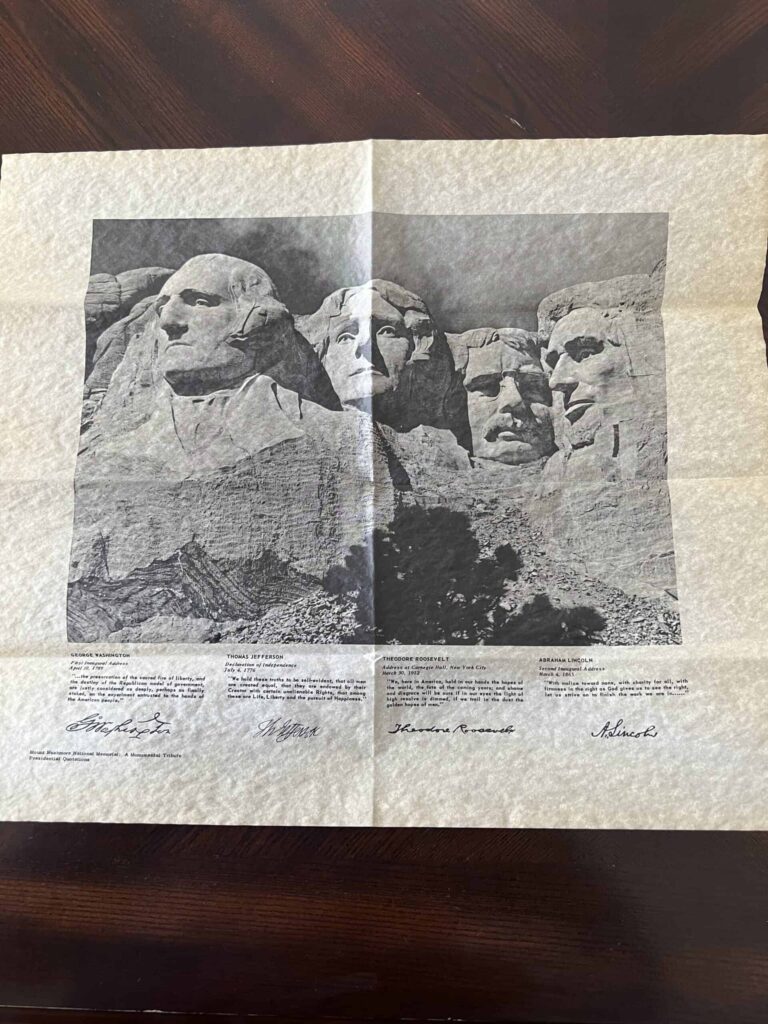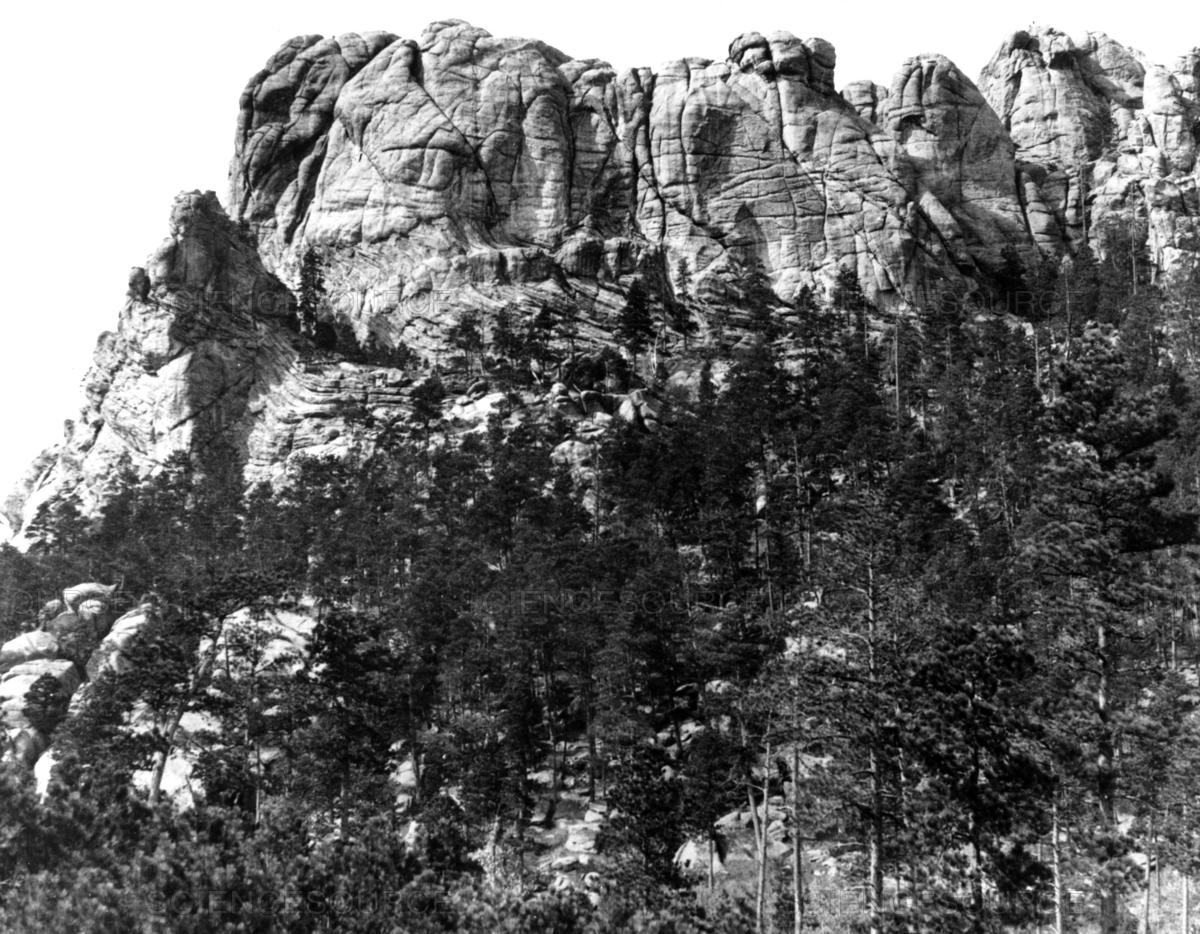
On October 4, 1927, the first actual carving began on Mount Rushmore in South Dakota’s Black Hills. Under sculptor Gutzon Borglum, workers began transforming the granite face of the mountain—known to the Lakota as Six Grandfathers—into a monument portraying four U.S. presidents: George Washington, Thomas Jefferson, Theodore Roosevelt, and Abraham Lincoln. Washington’s figure was the first to take shape, representing the nation’s founding.
The undertaking was both an artistic and engineering feat. Workers used carefully measured dynamite blasts to remove most of the granite, then descended the cliff in bosun’s chairs to refine the surface with pneumatic drills. About 90% of the mountain was carved with dynamite; in all, approximately 450,000 tons of rock were removed.
Construction continued intermittently for 14 years amid weather delays and recurring funding problems. Borglum died in March 1941, and his son, Lincoln Borglum, supervised the remaining work. With federal resources increasingly directed toward the coming war, Mount Rushmore was declared complete on October 31, 1941. Borglum’s original vision of full upper-body figures was never realized, leaving the monumental heads that remain today—an enduring and contested symbol of American history in the Black Hills.
Image credit: Historic photograph of Mount Rushmore before carving began, via Wikimedia Commons, public domain.