
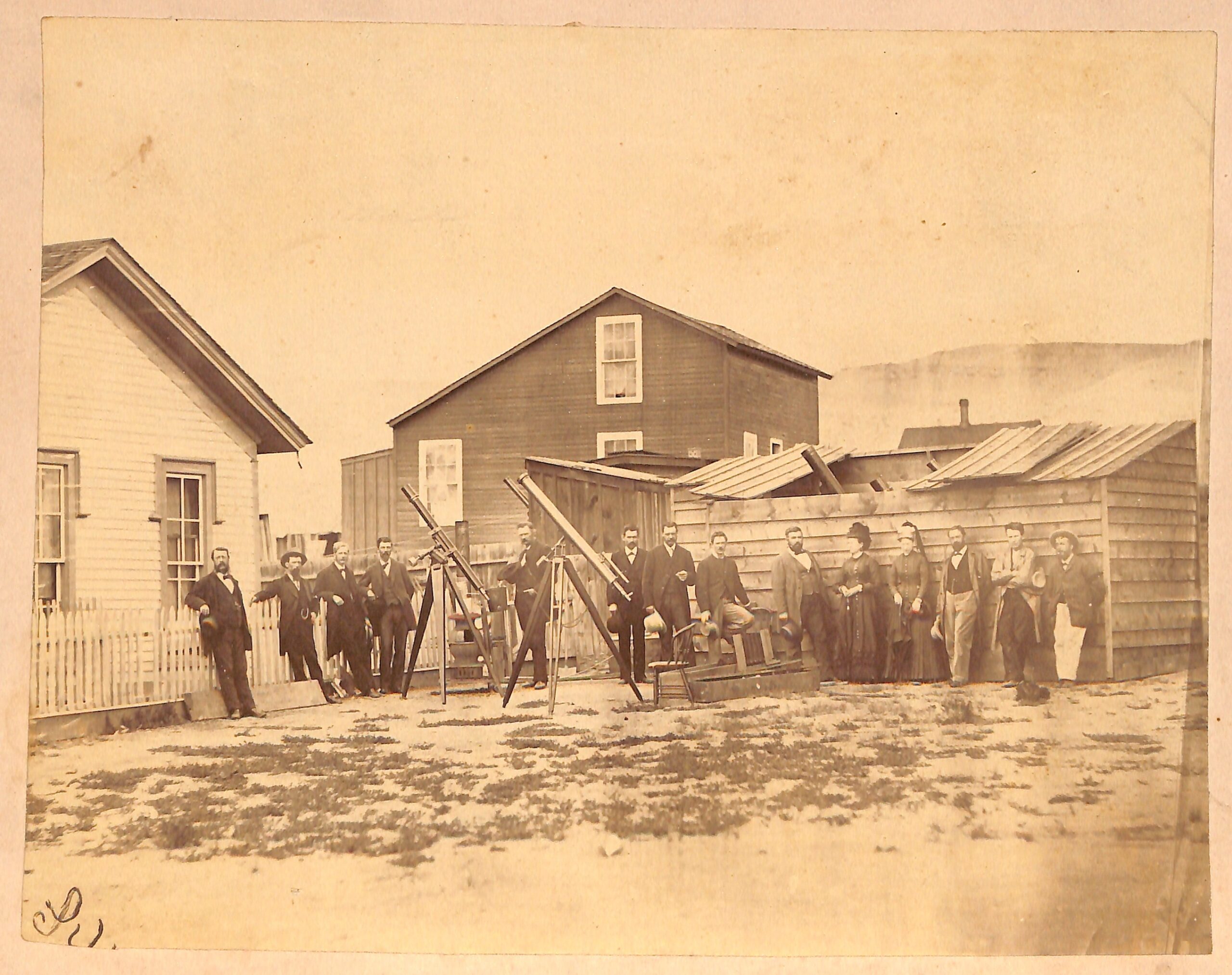
As a total solar eclipse swept across the American West, the frontier settlement of Rawlins, Wyoming Territory, became an unlikely epicenter for the global scientific community on July 29, 1878. A specialized train car brought an elite group of astronomers and inventors to the territory, including a young Thomas Edison. Eager to test his latest invention—the tasimeter, a highly sensitive device designed to measure minute changes in infrared heat—Edison set up his equipment in a crude, wind-swept wooden chicken coop near the train tracks.
When the moon finally blocked out the sun, plunging the prairie into sudden darkness, the experiment quickly ran into trouble. The wild, unpredictable Wyoming winds shook the fragile structure, and the extreme sensitivity of the tasimeter caused the instrument to go completely off the scale when exposed to the sun’s corona. While the experiment was a technical failure, the scene symbolized the expansion of scientific curiosity into the American frontier, drawing rugged frontiersmen, native guides, and world-class scientists together under the cosmic shadow.
It proved that the drive for technological innovation was not confined to Eastern laboratories, but could be tested in the wildest corners of the continent. The image of Edison tinkering with advanced technology in a remote territory captured the spirit of an era where scientific exploration and frontier grit merged to expand the boundaries of human knowledge.
