
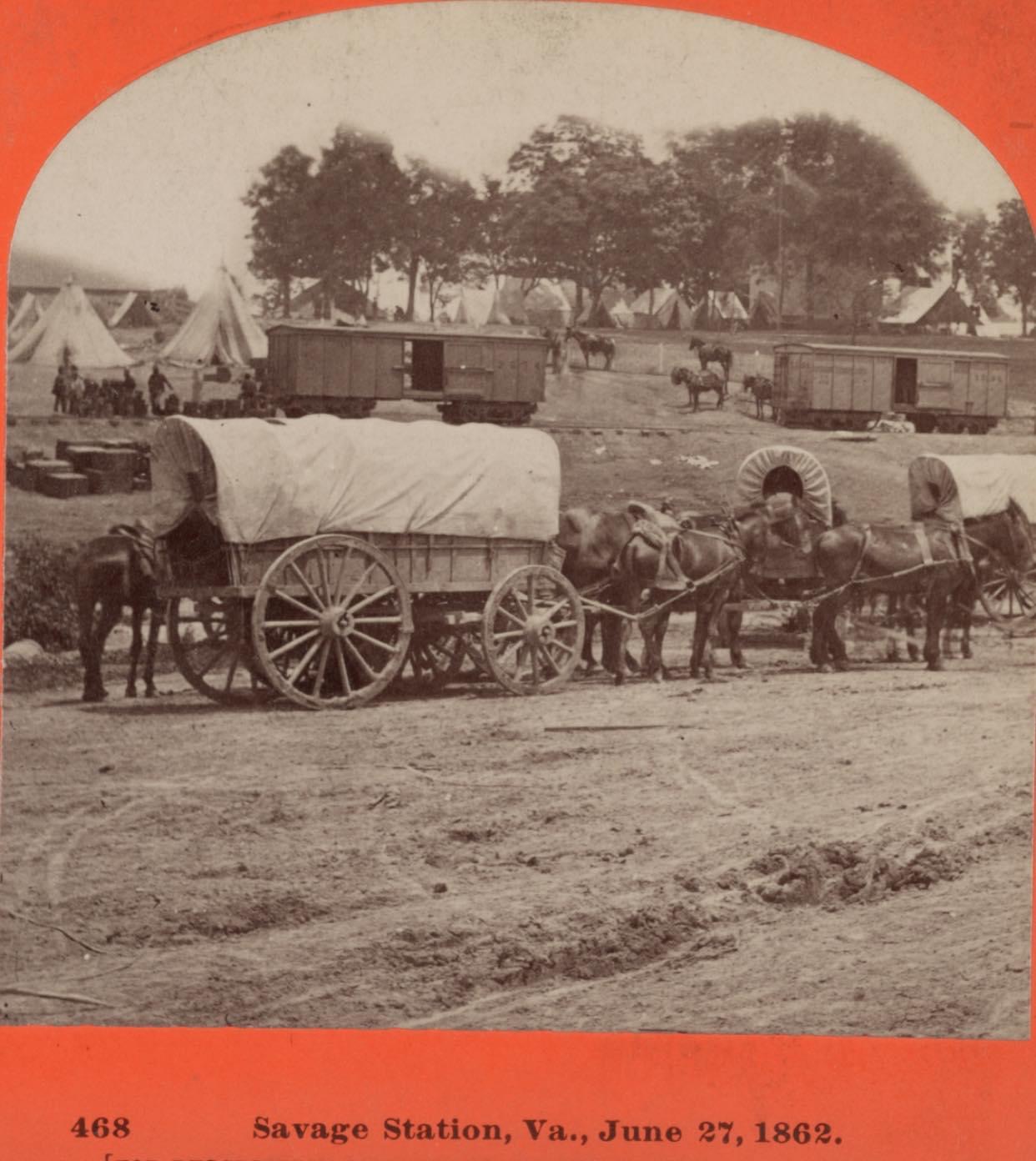
This photograph captures Savage Station two days before the Battle of Savage Station, when the site was still a busy Union supply and encampment point along the Richmond & York River Railroad. Wagons, tents, and boxcars filled the landscape as McClellan’s army strained under the pressure of the Seven Days Battles.
Within 48 hours, this logistical hub would be transformed into one of the largest improvised hospitals of the Peninsula Campaign. As the Union army began its chaotic retreat toward the James River, more than two thousand wounded Union soldiers were gathered around the station, laid out in long rows in the open air while medical staff struggled to keep pace with collapsing supply lines.
On June 29, with Confederate forces closing in, Union commanders made the agonizing decision to withdraw — leaving the most severely wounded behind with only a handful of volunteer surgeons and nurses. The tragedy was compounded by events the night before: to prevent their stores from falling into enemy hands, Union troops burned mountains of food, ammunition, and medical supplies. In the most dramatic act, they loaded a train with artillery shells, set it ablaze, and sent it careening down the tracks until it exploded in the Chickahominy River.
By the time Confederate troops reached Savage Station, the wounded left behind had lost not only their army, but the very medical supplies that might have saved them.
